Form in Interior Design: The Backbone of Every Beautiful Space
Form in interior design is the secret sauce that transforms plain, boring spaces into dynamic masterpieces. Understanding this design principle separates the newbies from the interior design pros. If you’re ready to raise the bar in your home and sharpen your interior design skills, this blog post is for you.

Let me guess. You’ve arranged and re-arranged the furniture in your living room for the third time this year, and something still doesn’t feel right. The furniture falls flat, the decor isn’t making the impact it should, and that expensive light fixture you invested in feels out of place.
Been there, done that.
Here’s the hard truth. The problem with your design goes deeper than color samples and textiles. It stems from the underlying structure of your space (the way shapes and forms work together).
At the core of every beautifully designed home is a delicate balance between organic and geometric forms. They lay the foundation for the rest of the design choices that come after.
Once you understand this principle, you can start focusing on space, light, texture, color, and all the elements of design that bring your space to life.
This isn’t about buying more things or starting over. It’s about understanding how the forms you already have (and the ones you’re considering) can work together to create the home of your dreams.
Form in Interior Design Definition
There’s a common misconception in interior design that form and shape are the same thing. Not true. Before we get any further, let’s break down the key differences between form in interior design and shape in interior design, and why this all matters for your home.
Form vs. Shape in Interior Design
Form is the three-dimensional shape and structure of objects (height, width, and depth). Think cubes and spheres. In contrast, shape refers to the two-dimensional structure of objects (height and width), like squares or circles.
Makes sense? At a basic level, think of form as the skeleton of your design. Just like your body’s frame determines your silhouette, the forms in your room define its overall aesthetic and functionality.
Whether your interior design style leans contemporary, traditional, or somewhere in between, form will play an essential role in the foundation of your design. It influences every decision that comes after it, from the color palette to the patterns and even the light sources in your home.
If you find yourself getting carried away with the small details in your design before considering the bigger picture, this blog post is for you. Let’s break down the different types of form in interior design, and how to apply them to your home to create visual balance and flow.
Types of Form in Interior Design: Organic vs. Geometric
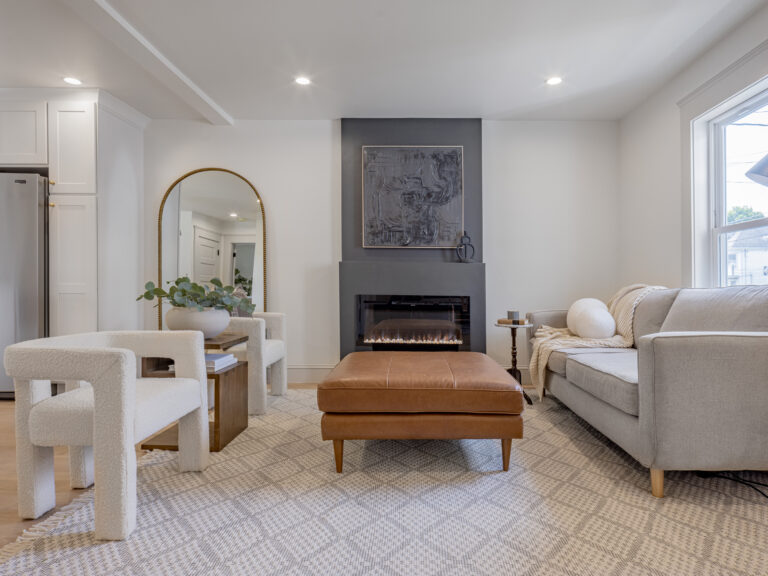
If you want a balanced home that flows effortlessly from one element to the next, you need to combine organic and geometric forms in your space.
Think of it this way. If all the forms in your room were straight, angular, and structured, your space would look way too rigid. On the other hand, if all the elements were curved, rounded, and irregular, there would be no order.
RELATED POST: Transitional Design Style 101: How to Create a Balanced Home
Each form brings its own look, feel, and energy to a space. Learning how to balance the two is the key to creating design harmony in your home.

Geometric Forms
Geometric form in interior design is defined by clean, straight lines and mathematical shapes. Your rectangular area rug, euro bed pillows, and circular wall mirrors are all examples of geometric forms. These forms create structure and order, and tend to align with a more minimal design approach.
Organic Forms
In contrast, organic forms mimic nature. They’re curved and irregular like tree branches, mountain lines, and cumulus clouds. These forms feel soft and natural, bringing movement to any space.
Think of arched doorways, curved staircases, decorative branches from your backyard, or even kidney-shaped rugs. All these elements work to soften harsh lines and bring visual relief to overly structured spaces.

Upgrade Your Home Using Form
Step 1: work with what you have
Whether you’re moving into a new home or transforming a space you’ve lived in for a while, you want to start with a blank canvas. And by that, I mean an empty space.
In this first step, we’re just focusing on your room’s existing architecture. Look around your space and take note of the walls, windows, door frames, and architectural details (like a fireplace, built-in shelves, or even ceiling beams).
All of these elements can be defined as geometric or organic forms. For example, if you have a room with high ceilings, this will create vertical geometric forms. In contrast, a room with arched doorways boasts organic curves.
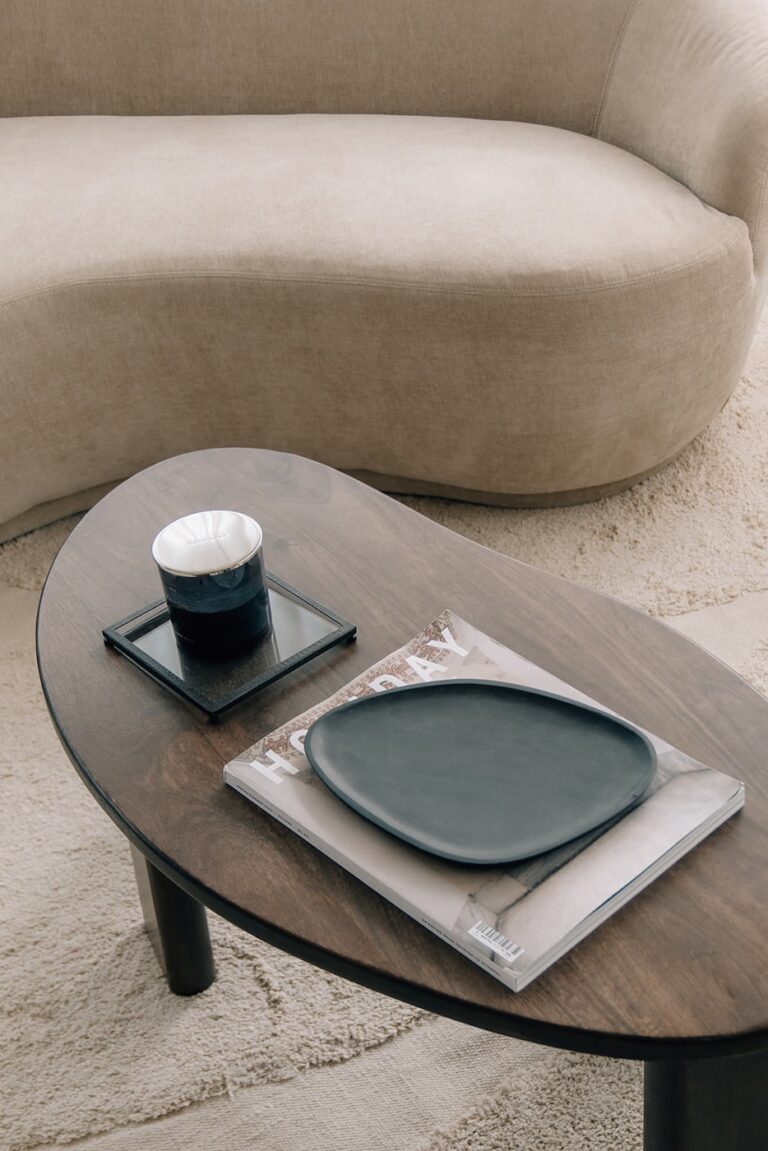
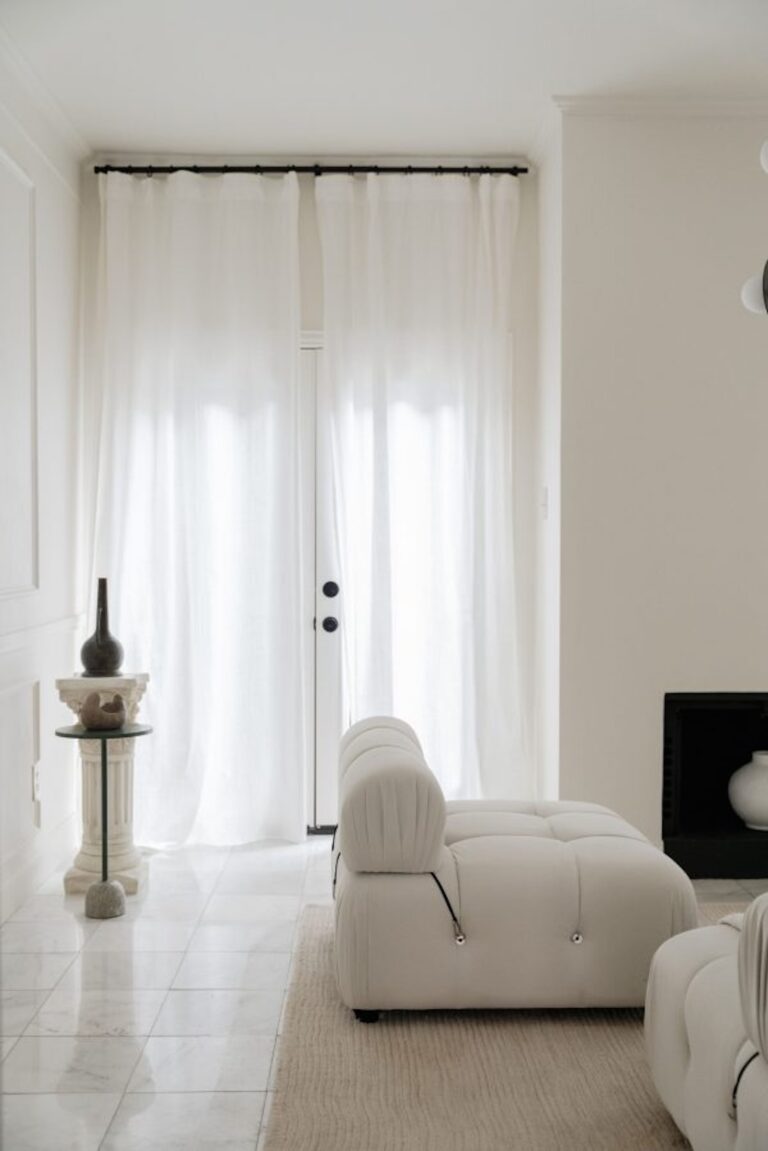
Unless you’re planning a major room makeover and changing every element, chances are, these are the forms you have to work with. Take note of the defining features and use them to guide your design decisions.
If your room has strong geometric bones (lots of right angles and straight lines), balance them with organic forms. For spaces with curved architectural elements, introduce geometric furniture for contrast. If your room has a combination of both, balance the two elements in your furniture and decor.
Step 2: balance scale and proportion
When making design selections, don’t overlook the scale and proportion of your furnishings. Scale is the relative size of an object within the context of a space. Proportion is the size relationship between one object and another.
Large forms can anchor a space and provide stability. But if all of your large-scale furnishings are geometric (like a rectangular coffee table paired with an angular sofa), your space will feel too structured.
Instead, strike a visual balance by pairing your geometric sofa with a pair of curved arm chairs.

Add a round pillow to your angular sofa that’s proportional in size, and layer a round vase on your geometric side table to balance the two forms. Diversifying form and scale ensures that your space feels balanced, intentional, and harmonious.
Step 3: create unlikely pairings
Now that you have your geometric and organic furniture and decor, it might be tempting to group the same forms together in your space. We’re not doing that.
Instead of placing all your geometric forms on one side of the room and the organic forms on the other, challenge yourself to mix and match.
RELATED POST: How to Create Your Dream Home *Without a Design Degree*
Start with your large-scale furniture first. Position your rectangular rug and angular sectional where you want them, then layer in the curved floor lamp next to the sofa and round coffee table in front. You’ll start to notice how the different forms interact with each other to create visual balance. This is the foundation for your Pinterest-worthy home.
From there, you can start to define your color palette, incorporate different sources of light, mix patterns and textures, and fill the space with your favorite decor pieces. But at the core of it all is the form.

Form in Interior Design Example: Steal My Method
I’m not going to lie to you. Most of the houses I’ve renovated have pretty standard architecture. Straight lines, angular door frames, rectangular windows, the works. So when it comes to selecting furniture and decor for each space, I have to get creative.
I start with an empty space and take stock of the existing forms. Then I introduce an anchor piece, or large-scale furnishing, to disrupt the geometric monotony. This could be a curved sofa or an oval dining table. Next, I choose a secondary piece in a different form, like a rectangular rug or angular dining chairs.
I repeat that process, getting smaller in scale as I go, until the room is filled with furniture and decor. My last step is lighting and wall decor. I ask myself: what does the room need?
If geometric forms are overpowering the space, I add an arched mirror and abstract art to the walls. In contrast, if the room is too irregular, I’ll introduce an angular floor lamp and oversized rectangular frames to ground the space.
This process is a constant push and pull. It requires you to take a step back, work slowly, and edit as you go. Don’t expect to master form in interior design on the first go around. It takes time.

The Role of Form in Your Home
Form in interior design isn’t based on perfect symmetry or strict design rules. It’s about creating a visual rhythm that makes your home feel both dynamic and balanced.
The forms in your space tell a story. The geometric elements provide stability and order, while the organic forms promote relaxation and calm. When you learn to speak this visual language, you’ll be able to create the Pinterest-worthy rooms you’ve dreamed of while staying true to your personal style.
This post is all about how to master form in interior design.