Should I Rent or Buy a Home? What the Calculators Don’t Tell You
Should I rent or buy? This is the question on every late-night Zillow scroller’s mind. It usually surfaces after the third outrageous rent increase, and (believe me) it never really goes away.
It’s not just about comparing a rent payment to a mortgage. It’s about timing, liquidity, stability, and how you want the next 5 years of your life to look. Here’s how to decide whether you should rent or buy without relying solely on a rent or buy calculator.

If you’re asking whether you should rent or buy a home, chances are you’re in that *in-between* stage. You hit your savings target, you negotiated a salary increase, and you’re wondering if it’s time to commit to a long-term mortgage.
I remember crunching numbers with different rent or buy calculators, searching for a sign to finally pull the trigger. At the time, I was 23, financially ambitious, and way in over my head. I spent more time than I’d like to admit playing around with different interest rates and down payment amounts as if I could somehow engineer a clear answer for my own peace of mind.
But I couldn’t. A rent vs buy calculator is helpful for comparing monthly costs and estimating long-term investment returns, but it can’t measure intangibles.
The thing is, this rent or buy decision goes beyond numbers. It’s about stability, flexibility, and whether ownership strengthens your life or stretches it. If you’re currently in the throes of big-time life decisions, this blog post is for you. I’m going to break down the math and the mindset behind this seemingly monumental housing decision so you can take your next step with confidence.
Start With the Math (But Don’t Stop There)
Before we get into the mindset piece, we need to know the raw numbers. Start by opening a rent or buy calculator. You can use a basic rent or buy financial calculator, a rent vs buy spreadsheet, or something more detailed, like the Zillow rent vs buy calculator or the NYT rent vs buy calculator free version.
If you live in a high-cost market, you could even search for something specific like a “rent vs buy calculator NYC model”. There are tons of options out there, but the ones listed below are my personal favorites.

Tried & Tested Rent or Buy Calculators
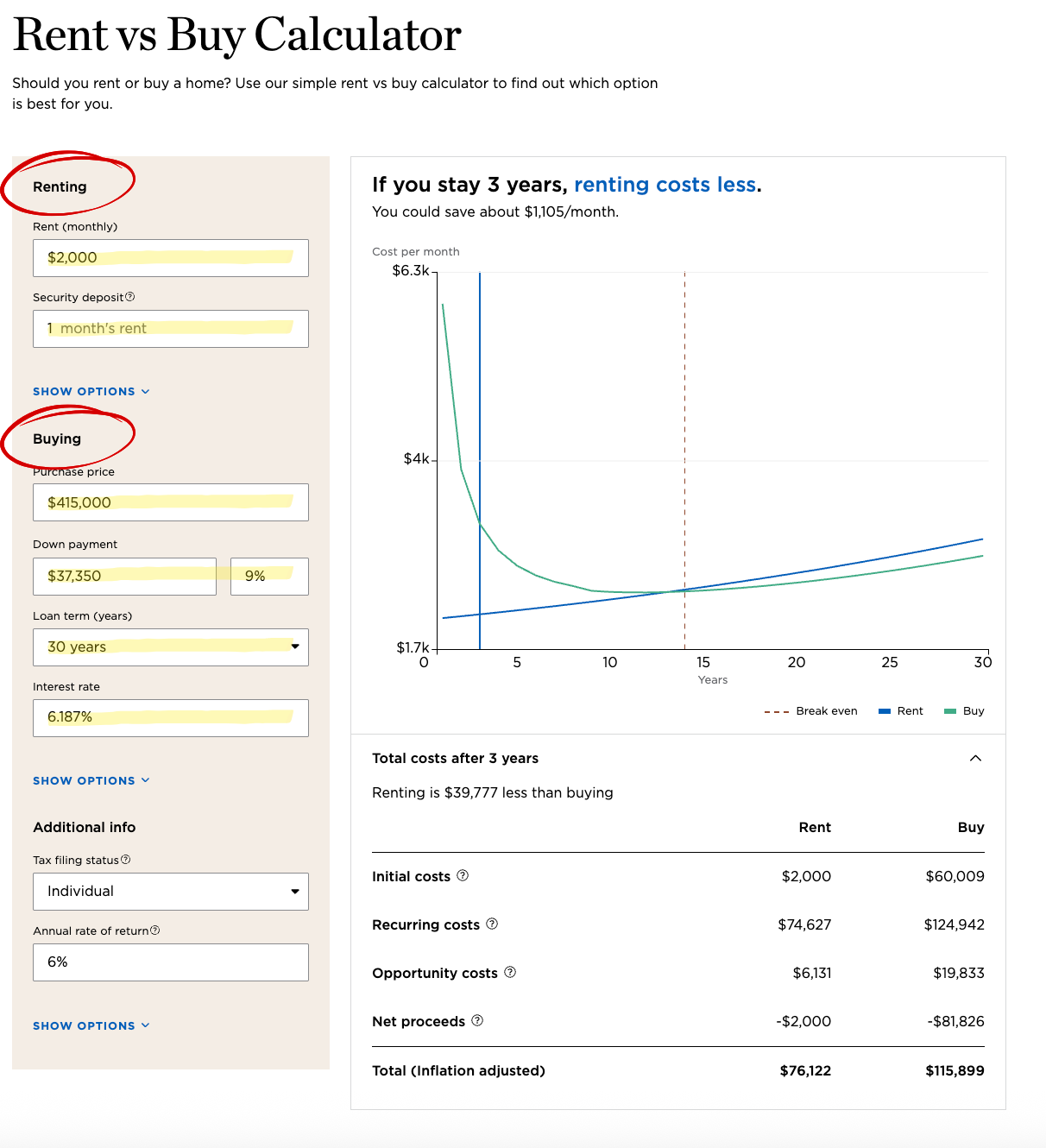
Nerdwallet has an easy-to-use option that gets really granular. You can adjust a range of variables, from rent prices, security deposits, and estimated annual rent increases on the renting side to purchase price, down payment amount, and interest rates on the buying side. From there, the rent or buy calculator will crunch the numbers and tell you which housing option is cheaper over a 3-year period.
If numbers and variables aren’t your thing, Realtor.com has a more streamlined option. It compares renting and buying over a 30-year period using 4 primary inputs: home price, down payment, monthly rent, and renters’ insurance, plus your ZIP code.
For number nerds like me, I recommend giving their advanced version a try as well.
How to Interpret the Results
These tools give you a baseline, but they stop short of painting the full picture. Most rent or buy calculators assume:
- You’ll stay in the home long enough to benefit from appreciation
- You’ll invest the difference if renting
- Your income remains steady
- Market conditions stay relatively constant
- Renovations are limited to basic maintenance
In theory, the math looks clean. But in practice, life rarely follows a perfect model. So let’s use the numbers as a starting point. Create a baseline, understand its limitations, and layer on your judgment from there.

What Buying *Actually* Costs Beyond the Mortgage
The rent or buy housing dilemma goes way beyond rent prices and mortgage payments. If you decide to buy, you’re also signing up for:
- Paying for closing costs
- Covering the full down payment
- Paying monthly property taxes and homeowners’ insurance
- Footing the bill for routine maintenance and unexpected repairs
- And, realistically, upgrades
Because let’s be honest. You care about the interior design of your home. You’re not moving in and leaving everything “as-is” forever. You’ll repaint the walls, change the fixtures, swap out the hardware, and add storage sooner than you probably expected.
That’s normal. It’s part of making a house feel like yours. So, before you commit to buying, make sure you feel comfortable with the estimated monthly payments (including escrow), the inevitable surprise repairs, and the eventual renovation costs.
If you want to learn more about the real cost of homeownership before taking the next step, I did a deep dive on the hidden expenses that not enough first-time home buyers are talking about. Read the post here 👉 The Actual Cost of Homeownership: 8 Hidden Expenses You Need to Know.

The Realities of Renting
Renting doesn’t build equity, but it does offer flexibility.
When you rent, your upfront costs are lower. Your maintenance responsibility is minimal. And your exit strategy is simple. If your job changes, your relationship shifts, or a new opportunity pops up in another city, you can move relatively quickly. That optionality can be really valuable.
Renting also protects your liquidity. Instead of putting your funds into a large down payment, you can keep your cash invested, accessible, and earning income in a high-yield savings account for future goals.



Plus, you don’t have to worry about maintenance and repairs, since these are usually the landlord’s responsibility. Ask any renter, and they’ll tell you there’s a huge advantage to having a maintenance person on speed dial when problems come up. Because they always do.
If you’re still figuring out which neighborhood you like the best, what home type works for your lifestyle, or whether you even want to stay in one location long-term or explore different areas, renting buys you time to make those decisions slowly.
Sometimes the smartest move is giving yourself another year to observe, save, and refine what you actually want (societal expectations and “American Dream” pressures aside).

Rent or Buy? 3 Key Questions to Ask Before Signing
There’s no *one-size-fits-all* answer to this housing decision. Your right move will depend on your finances, your timeline, and your season of life. Before you commit to renting another year or signing a 30-year mortgage, reflect on these 3 questions.
Rent or Buy Brainstorm 🧠
If you want to learn about the real cost of closing on a real estate transaction, I created a breakdown of the most common costs you can expect to pay at the closing table. Read the post here 👉 A Homebuyer’s Guide to Real Estate Closing Costs.
So, Should I Rent or Buy a House?
This housing decision comes down to your personal circumstances, lifestyle preferences, and risk tolerance. There’s no right or wrong answer. If you still need more clarity, use this final filter to simplify your decision-making: how long do you *realistically* see yourself owning? I don’t necessarily mean living in one house; I mean actually owning it.

If it’s less than 5 years, renting is probably the better move. You won’t own it long enough to realize the full financial benefits. If it’s 5 years or longer, buying becomes a more compelling option because you give appreciation time to work its magic and spread out your upfront costs. Real estate rewards patience.
Start by running the numbers, then ask yourself the hard questions. Try your best to drown out the noise and silence the imposter syndrome. The more honest you are with yourself today, the more confident you’ll feel about your decision tomorrow. And if you’re still unsure whether to buy or rent a house, talk to a financial advisor. They can help you assess your finances objectively and make the best decision for you today.
This post is all about creating a rent or buy strategy you can feel good about.
Get Even More First-Time Home Buyer Guides:
- A First-Time Home Buyer’s Guide to Real Estate *Closing Costs*
- How to Find the Best Real Estate Agent: 5 Must-Know Tips Before You Sign
- First-Time Home Buyer Guide: From Open House to *Under Contract*
- The *Actual* Cost of Homeownership: 8 Hidden Expenses You Need to Know
- House Shopping 101: What Happens After You’re Pre-Approved