7 Bedroom Designing Rules That Are Meant to Be Broken
At it’s core, bedroom designing is an act of self-expression and exploration. But somewhere along the way, it became crowded with rules, formulas, and trends that sucked the creativity out of it. In this blog post, I’m going to cover the 7 bedroom designing rules that you should actually want to break in order to create your dream space.
Forget everything you’ve been told about bedroom designing. Center the bed. Buy matching furniture sets. Keep it minimal. While these bedroom design rules aren’t technically wrong, they strip away the nuance of interior design.
Here’s the thing. Bedroom designing is all about creating a space that reflects you: your personal style, your routines, your priorities. Every design element, from the paint color to the pillow arrangement, should contribute to that central idea.
If you play by the rules instead of your own design intuition, you’ll be left with a boring, flat room that looks more like a Macy’s catalog than your own home.
This approach isn’t about rebelling against the mainstream. It’s about reshaping the rules to fit your style. If you’re ready to invest in your bedroom design and create a retreat you can’t wait to come home to, this blog post is for you. Here are 7 of the most popular bedroom designing rules, why they’re wrong, and what to do instead.
Bedroom Designing Rules You Should Ignore
Whether you’re planning a major bedroom re-design or tweaking your existing space, these are the 7 bedroom design rules you need to erase from your mind. Like right now.
1. The Neutral Bedroom Design Rule
I love neutral spaces as much as the next girl, but I’ve noticed that neutral bedrooms have become the default rather than an intentional choice.
Greige walls. Crisp white bedding. Soft wood finishes. These are all calm design elements, sure. But are they personal? Not always.
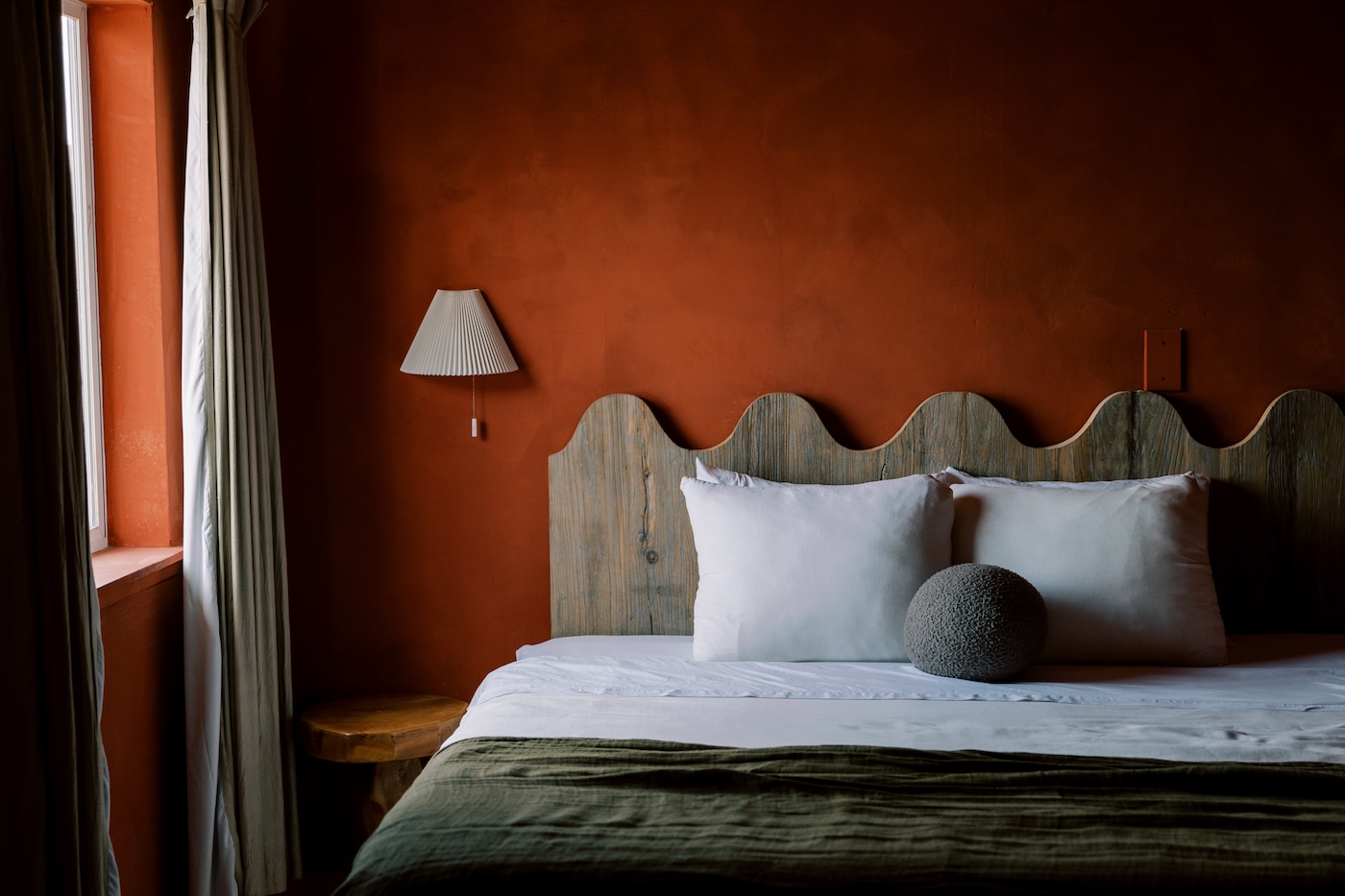
Color isn’t the problem here. It’s overstimulation. When people say they want a calm bedroom, what they actually want is visual consistency. A color palette that works together. Materials that repeat. A room that feels cohesive and comfortable at the end of a long day.
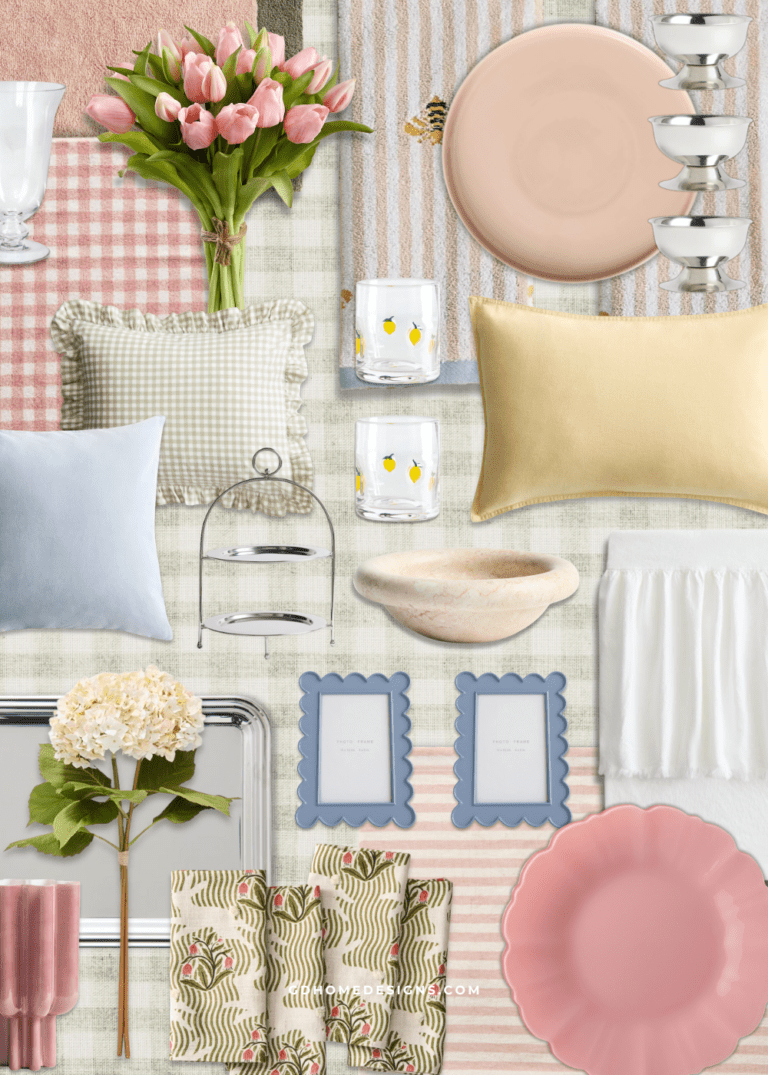
That can absolutely be neutral. But it can also be soft blue walls with slate accents, a muted olive headboard with green patterned pillows, or a warm blush rug with drapes to match. Color isn’t the problem. How you execute it is.
Bedroom designing color should support how you want to feel in the space, even if it doesn’t match your Pinterest feed. If a color makes you feel relaxed, happy, and comfortable, trust your gut and give it a try.
2. The Matching Furniture Rule (My Least Favorite)
I’ve fallen prey to this traditional bedroom design rule, and I bet most people reading this have to. It’s easy to understand why. Matching bedroom sets are the most efficient way to furnish a bedroom. You buy everything at once, you know it works together, and there’s no second-guessing required.
But here’s the undeniable truth. Matching sets reduce your design autonomy to a single choice. No creativity, no originality, and definitely no personality. The result is a bedroom that looks more like a showroom than a home.
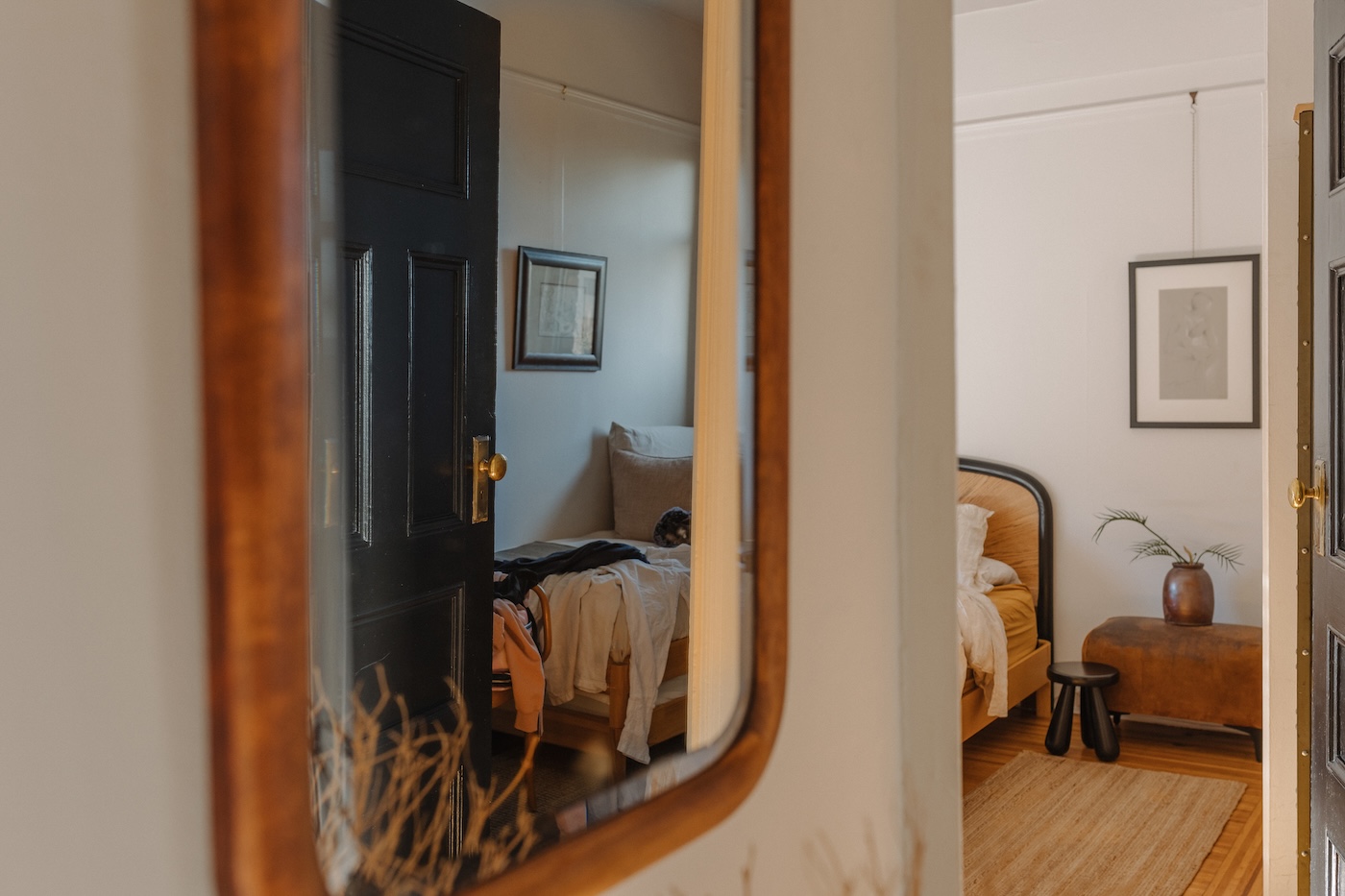
If you want a bedroom design that reflects your style and vibe, you need to curate your pieces rather than shop from a single collection. The best bedroom design ideas come from mixing finishes, materials, styles, and silhouettes.
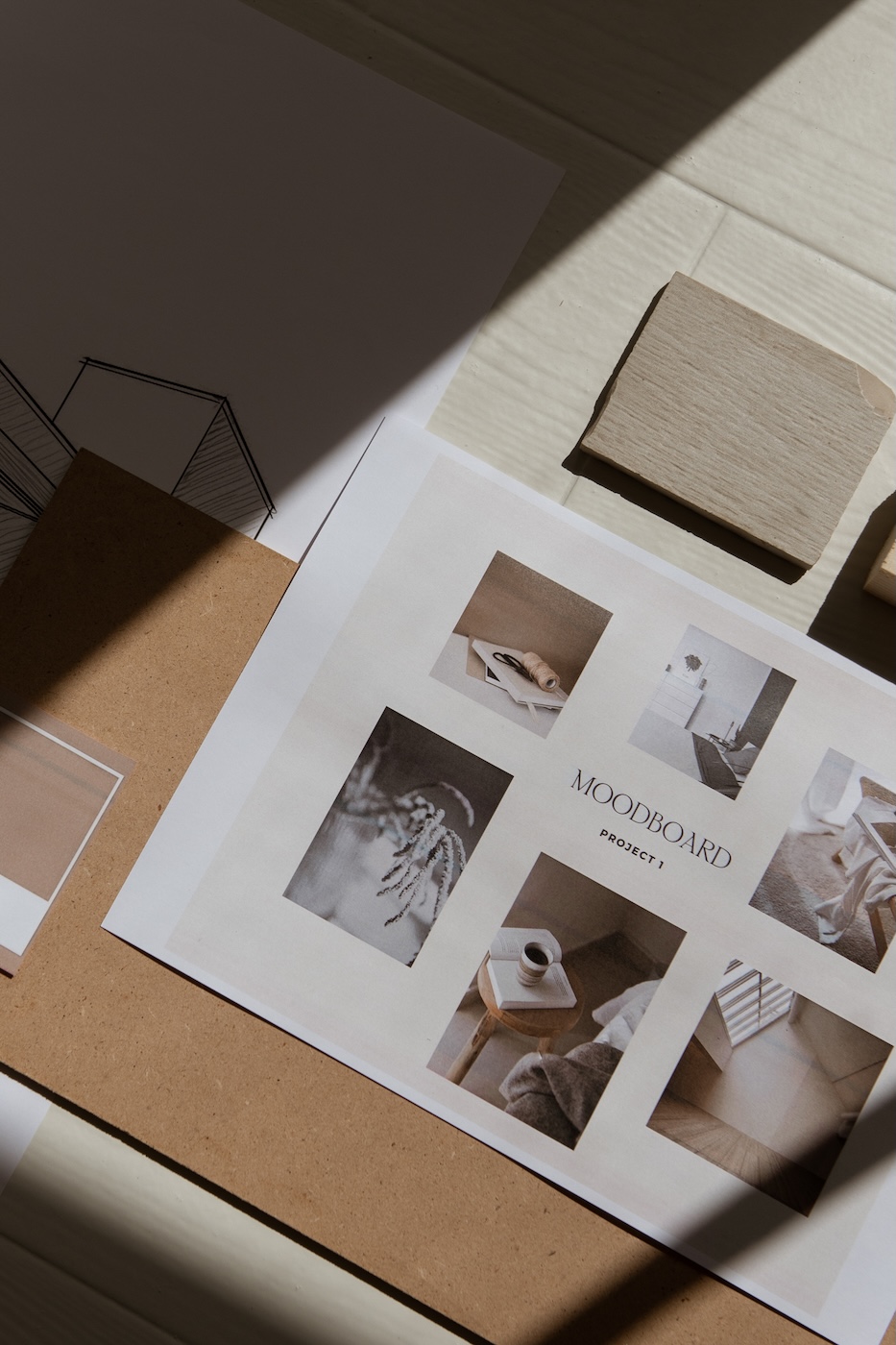
Think an upholstered bed paired with wood nightstands. A modern metal lamp on top of a vintage dresser. A wingback armchair paired with a marble side table.
If mixing and matching feels intimidating, start by mixing two different materials. Just two. Maybe you add metal nightstands under your traditional ceramic lamps. Or an upholstered bench at the foot of your wood bed frame. Test it out, live with it for a while, then repeat the process.
3. Small = Minimalist Rule
Small bedroom design advice loves to push minimalism as the cure-all. Simple furniture. Minimal decor. No fluff. And while restraint matters in design, it’s important to remember that minimalism isn’t the only solution to tight spaces.
The key is scale and balance. For example, replacing a crowded gallery wall with one large statement art piece can actually make a room feel bigger. It tricks the eye into thinking the space is more expansive than it is simply by leveraging scale.

Balance is just as important. If one side of the room carries all the visual weight, the space feels off, even if it’s technically minimal. Furniture, decor, lighting, and wall art should all work together so no single area feels forgotten or overloaded.
RELATED POST: How to Design Your Very Own *5-Star* Hotel Bedroom
Bedroom design ideas for small rooms are tricky, sure, but it just takes careful planning. Before you get rid of all your treasured pieces in the name of minimalism, play around with the balance and scale of your space. You’d be surprised how far a small space can go.
4. “Center the Bed” Rule
The classic bedroom design we all know and love is based on symmetry. Don’t get me wrong, a centered bed flanked by nightstands looks great when the room allows. But it’s not doable for all layouts.
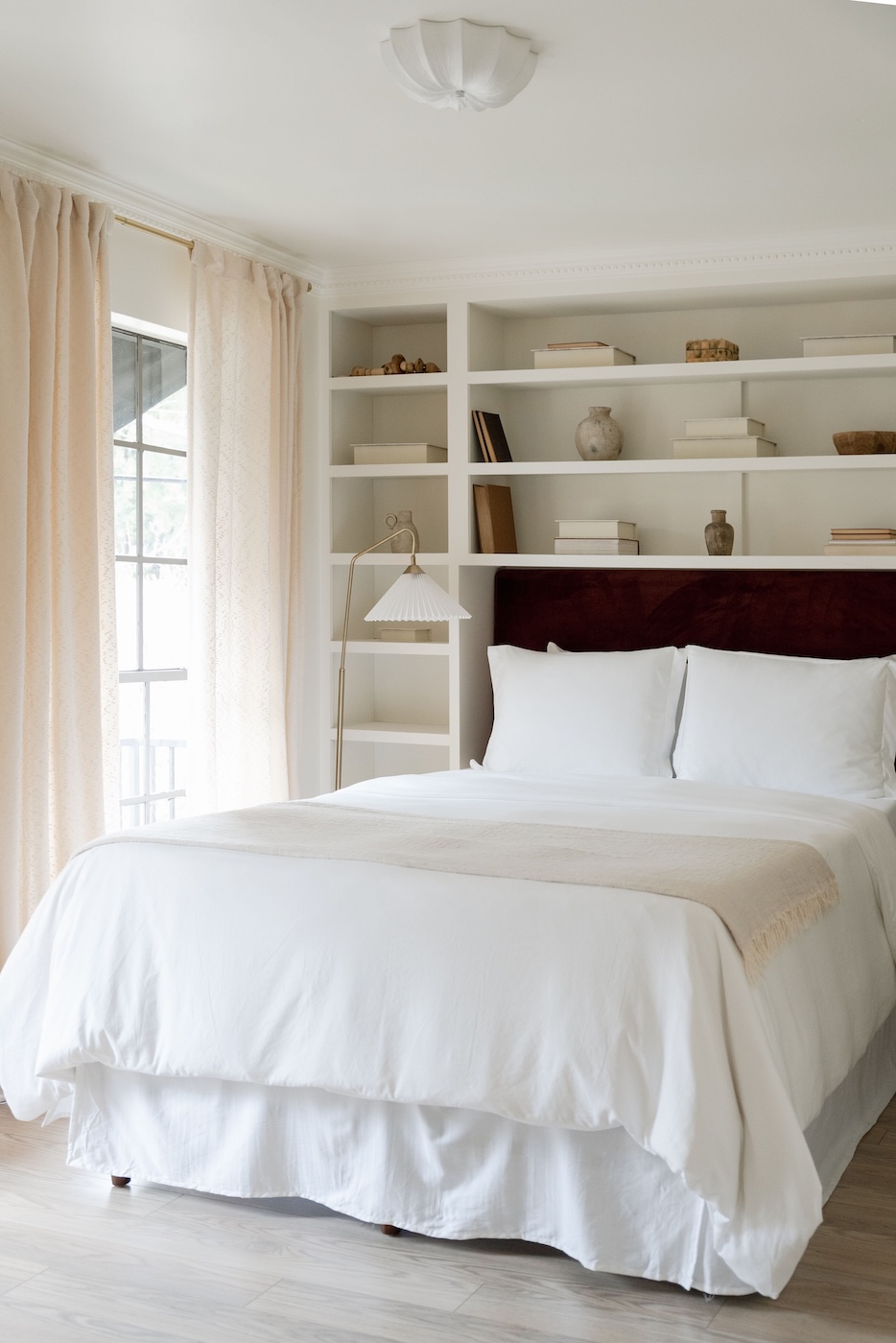
Windows and doors land off-center. Closets interrupt walls. That’s just the way things go. If you try to force symmetry where it doesn’t belong, you’ll end up with an awkward layout, wasted space, and a funky-looking bedroom. Trust me, I’ve tried.
My advice? Work with the layout you have, not the one you want. If centering the bed blocks a window or makes one side of the bedroom unusable, shift it and use other design elements (like lighting, wall art, or furniture) to balance the space. Don’t be afraid to test different furniture configurations until you land on the one you love. Remember, bedroom designing is an art, not a science.
5. Single-Function Rule
In theory, separating sleep from everything else sounds like a healthy boundary. In practice, well…it’s not that simple. Bedrooms carry more responsibility than we’d like to admit.
They’re where you read. Wind down. Stretch. Drink coffee in the morning. Maybe answer an email or two. We’re all human here. So why not design a space that supports our daily routines rather than complicating them?
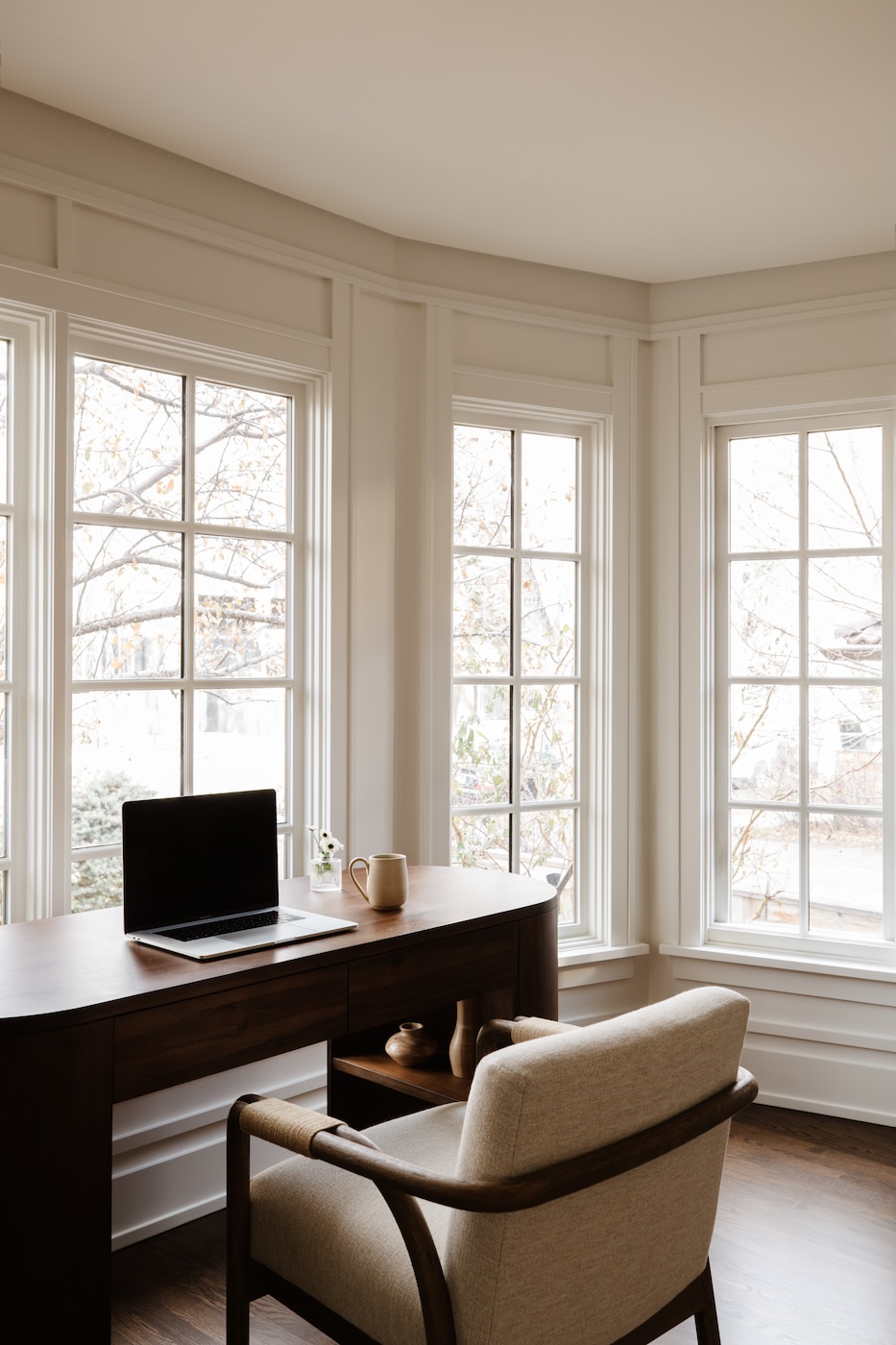
The key is zoning. Keep the bed area free of distractions and designate separate zones in the bedrooms for work, reading, and routine activities. Maybe it’s a desk in the corner that doubles as a makeup vanity. Or an accent chair where you can read your favorite books and take a work call.
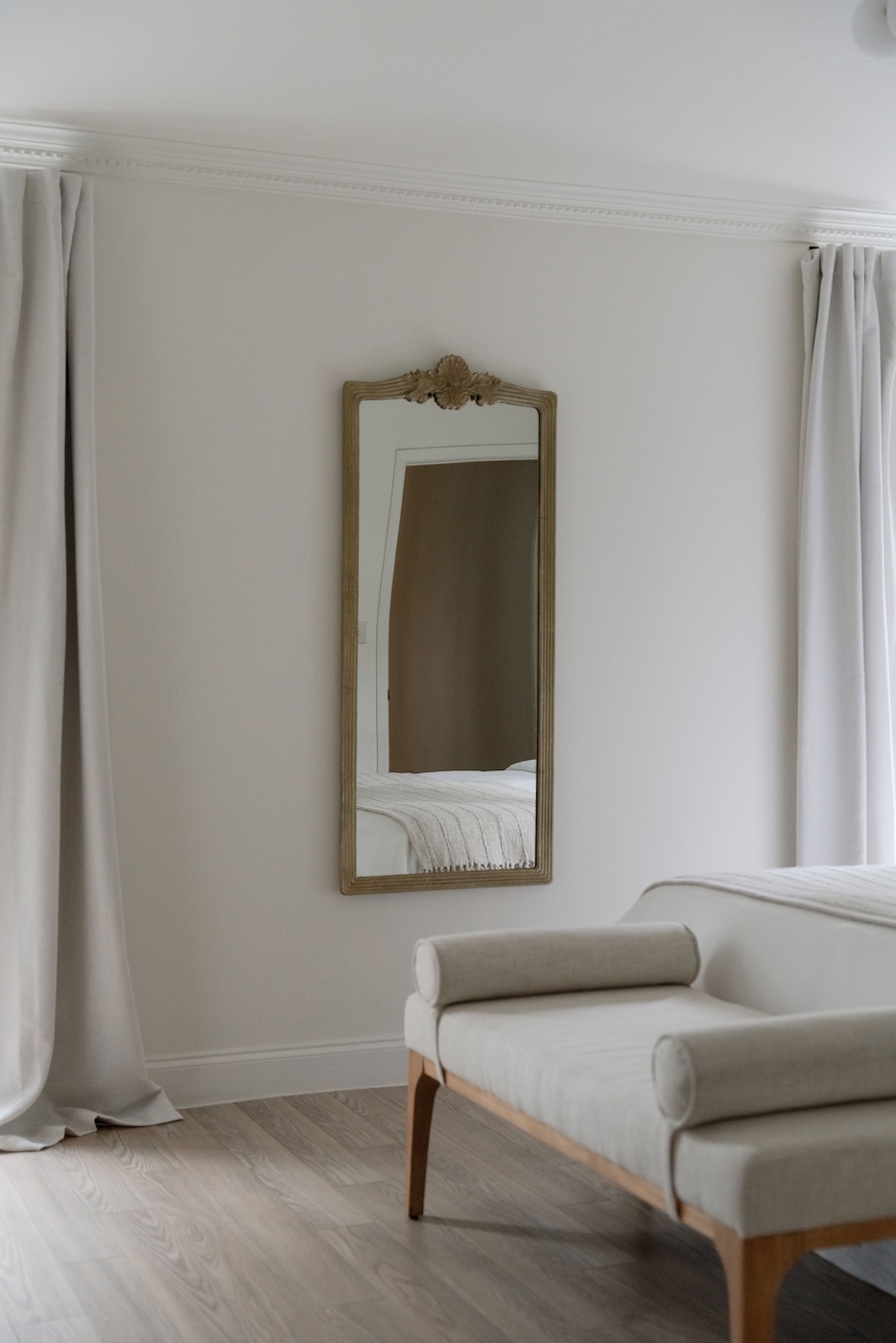
Let’s face it. Your bedroom is multi-faceted, and so are you. You might as well embrace it through a more modern bedroom design rather than fighting it.
6. “The Less Decor, The Better” Rule
Simple bedroom decorating ideas tend to fall flat. People interpret simplicity as bare walls, empty spaces, and minimal decor.
But the “less is more” approach is deeper than that. It’s all about curating your design choices and focusing on pieces that add aesthetic, functional, or emotional value to your space. It’s deliberate, not necessarily minimal.
Plan Your Next Bedroom Makeover
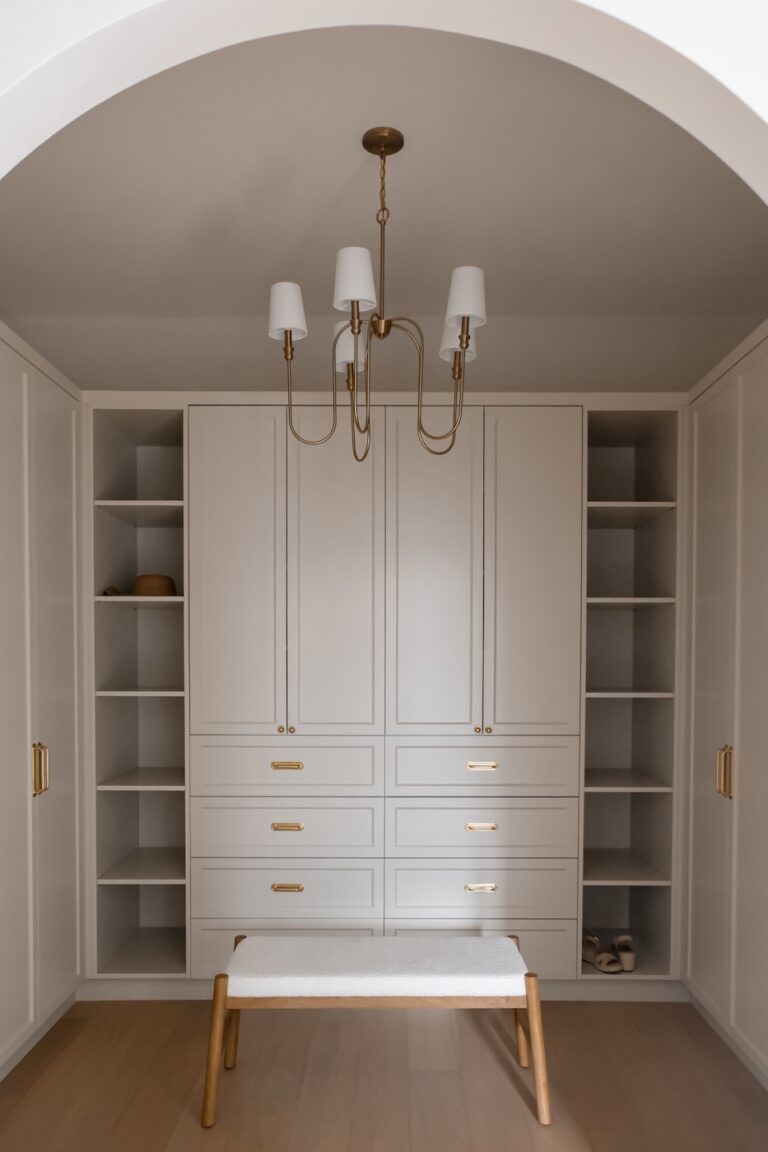

If your bedroom feels unfinished, it’s not because you added too much. It’s usually because you stopped too soon. So hang the family pictures, add the throw pillow you can’t stop thinking about, and go bold with your curtains. Build your layers gradually and don’t be afraid to make mistakes. Home decor is easy to swap out and transition as your style evolves.
7. The “No Trends” Rule
This might sound strange coming from me (as the anti-trends girl), but I think trends get a bad reputation in bedroom design. The trick isn’t avoiding design trends altogether; it’s all about incorporating them strategically.
RELATED POST: 17 Home Decoration Ideas that Bring Personality to Every Corner
Start with a timeless foundation (think a classic bed frame, nightstands, and a dresser), and layer in trendy home decor pieces on top. That way, when the trend fades or you move on to your next design obsession, you’re not stuck with a velvet green bed that clashes with your new aesthetic.
Stick to low-risk investments like trendy pillows, lamp shades, throw blankets, and decorative accents that can evolve with your style.
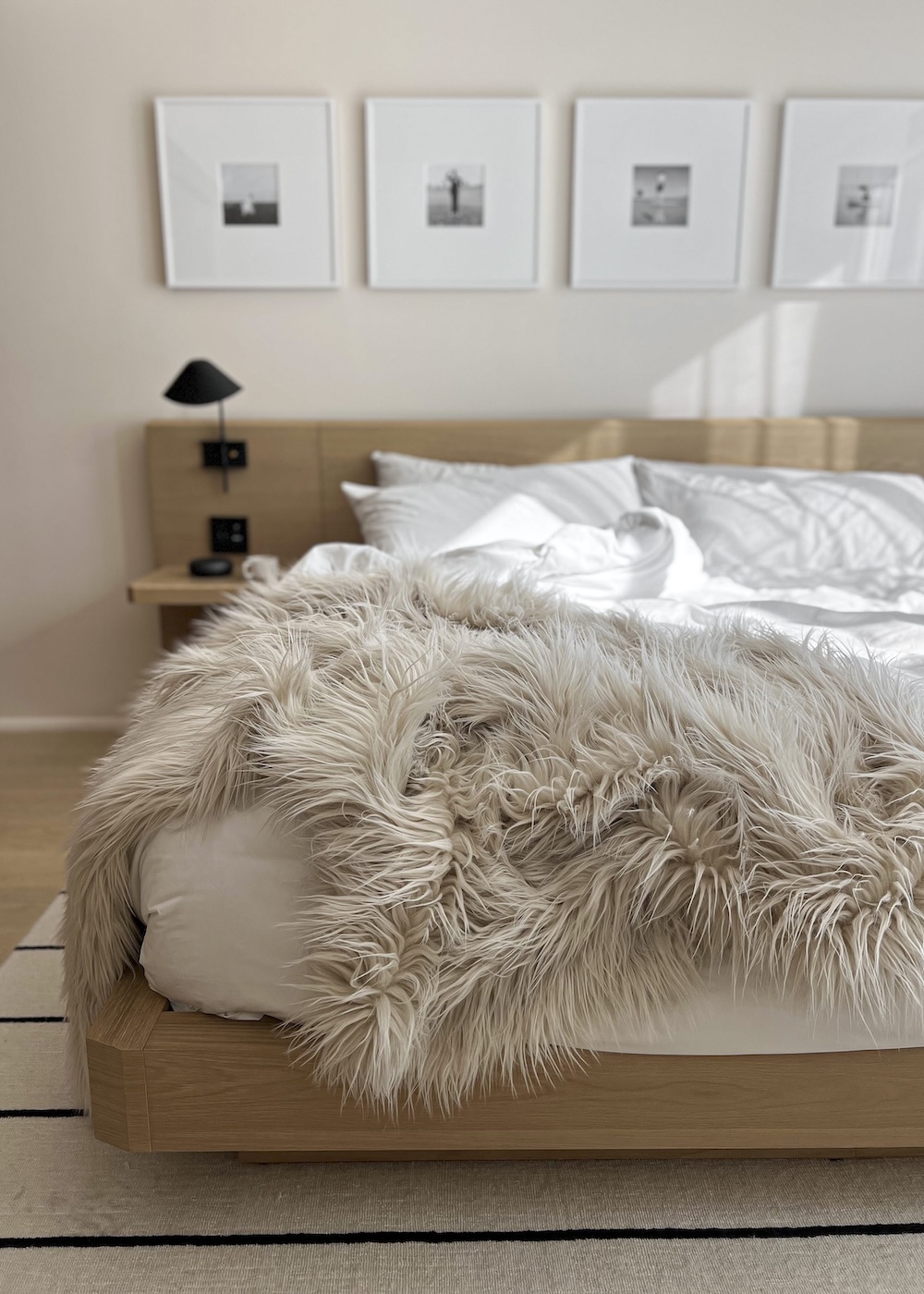
Bedroom Designing Without a Rulebook
Tune out the noise, stop the scroll, and forget the rules. Bedroom designing becomes way easier when you stop creating for other people and start asking yourself the hard-hitting questions.
What color palette makes me feel most at home? Which decor pieces speak to me, and which feel forced? How can my space make my morning and night routines lighter?
Rules can be a helpful starting point, but the true art of bedroom designing is all about vibes. A well-designed bedroom feels calm without being bland. Layered without being cluttered. And personal without being precious. It evolves with you instead of locking you down. Design it accordingly.
This post is all about bedroom designing rules that are meant to be broken.
Check out more Helpful Design guides