Home Renovation Cost: How to Build a Budget You Can Stick To
Estimating your home renovation cost doesn’t have to be hard. Here’s how to forecast realistic labor and material costs for your renovation project before you make any big purchases (no finance degree required!)
This post contains affiliate links. We may earn a small commission when you purchase through links on our post, at no cost to you. We only recommend products we would use ourselves, and all opinions expressed below are our own.

After managing several home renovations myself, I know how quickly a renovation budget can escalate before work even begins. Labor costs vary by market, material prices shift constantly, and contractor quotes almost never come with a clear, line-by-line explanation (I wish!)
As my project scopes grew over time, so did my due diligence. After one too many budget scares, I transitioned my cost-forecasting strategy from a “best guess” approach to a structured, easy-to-use budget that gives me peace of mind before I spend a single dollar.
Now I’m sharing that exact home renovation cost estimator with you so (hopefully) you don’t make the same money mistakes I did.
By the end of this post, you’ll know how to use a home renovation cost tracker to build a realistic budget based on your project scope, design goals, and savings account, so you can move forward with confidence.
What Really Drives Your Home Renovation Cost
Before you can build a realistic renovation budget, you need to understand what’s actually moving the numbers up and down. Knowing these variables up front helps you set an achievable design scope, avoid sticker shock, and protect your finances throughout the project.
Scope: Cosmetic vs. Structural
Cosmetic updates and structural changes are two distinct project scopes with really different cost implications. Getting clear on your scope early prevents “project creep” later on.
Cosmetic Renovations
A cosmetic renovation means you’re working with the existing structure. Paint, tile, fixtures, hardware, maybe new cabinetry. You’re updating what’s there, not moving things around. According to HomeGuide’s 2025 Cost Guides, cosmetic updates typically run $15 to $60 per square foot.
Structural Renovations
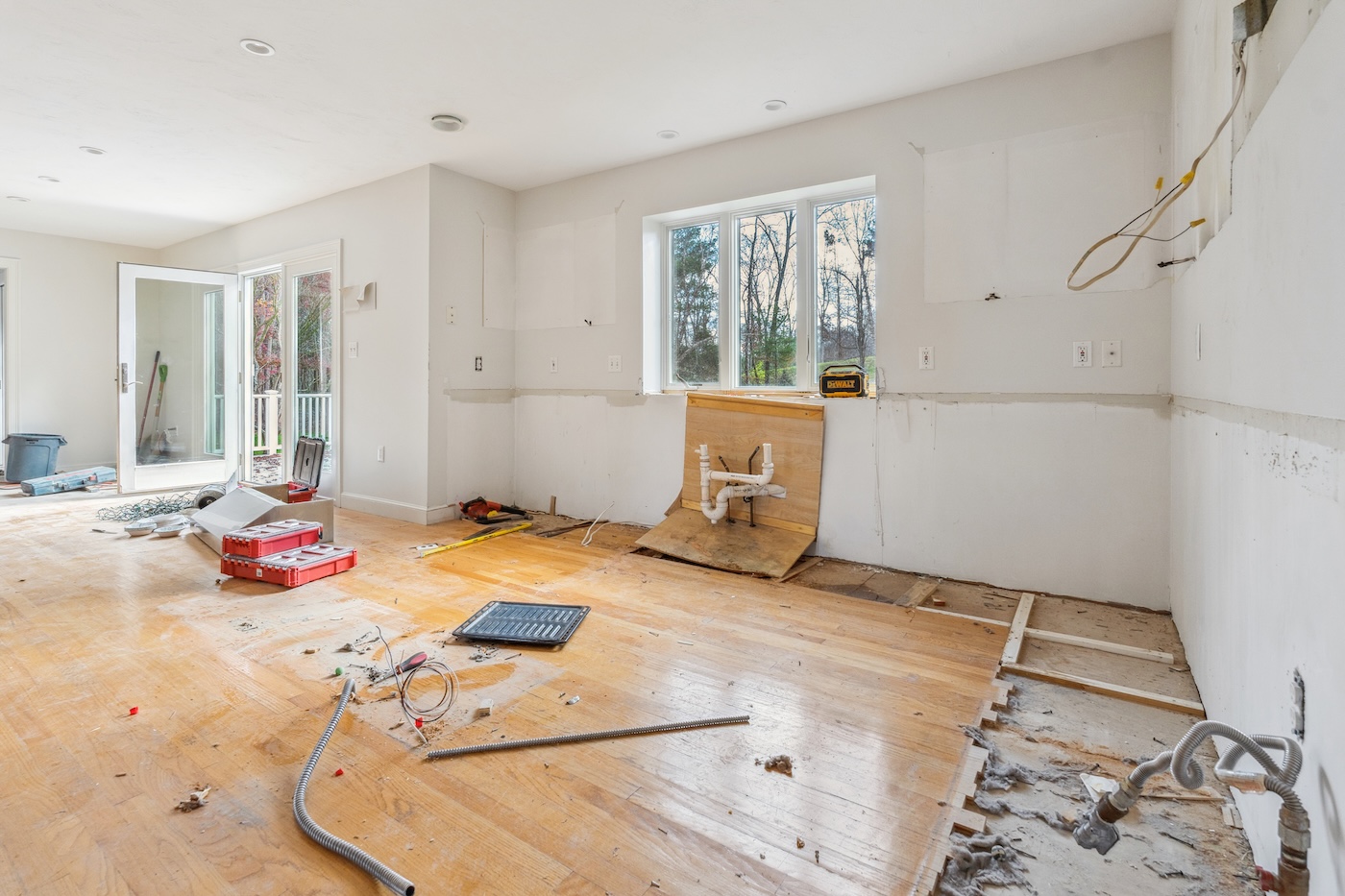
A structural renovation means you’re changing the bones. Moving walls, rerouting plumbing, adding square footage…the big stuff. That same project can jump to $60 to $150+ per square foot, sometimes even higher depending on what you find once demo starts (and there’s always something!)
Home Renovation Cost Based on Scope
Here’s a quick formula I use based on the home renovation cost per square foot:
Estimated Home Renovation Cost
Estimated Cost = (Total Square Footage) x (National Average Price per Square Foot)
So, for example, how much does it cost to remodel a 2,500 sq ft house? Using those ranges, a cosmetic update could run $37,500 to $150,000. A whole house renovation cost on the same footprint could easily hit $250,000 to $375,000 (or more), depending on the scope and finishes.
These numbers are starting points, not final bids. Your actual cost will depend on your location, material choices, contractor rates, and what’s going on behind the walls. Use them to frame your expectations before conversations.
Materials & Finishes
The money gap between a mid-range and an upscale kitchen is almost entirely finishes. According to the National Kitchen & Bath Association’s 2025 Kitchen Trends Report, a mid-range kitchen remodel averages around $71,000, while an upscale remodel can exceed $137,000.

That’s a massive difference based on finishes alone. But you don’t need to splurge on every detail today.
If you’re working with a tight budget, prioritize your spending on things that are hard to replace: cabinetry, countertops, tile, and plumbing fixtures. Save on things that are easy to swap later: paint, hardware, light fixtures, and decor.
Location and Timing
Labor and permitting costs vary significantly by region. A renovation in a major metro will usually cost more than the same reno in a smaller city or suburb due to a higher cost of living and stronger demand for construction labor.
To offset regional premiums, collect multiple bids and avoid signing with the first contractor you meet. And if your schedule is flexible, starting in the construction off-season (late fall or early winter) can sometimes get you better availability and pricing.
Hidden Costs and Contingencies
No matter how carefully you plan your home renovation, surprises happen. That’s why you need an emergency fund. AKA a construction contingency.
Think of your construction contingency as a built-in safety net for when things don’t go according to plan. As a general rule, your contingency should be sized around 5 to 15% of your total project cost, depending on the complexity of your project.
If you’re just making cosmetic changes, aim to set aside at least 5% for unexpected expenses. On the flip side, structural work, gut renovations, and older homes should stay on the higher end of that range.
I’ll admit, the contingency isn’t the most glamorous line item in the renovation budget, but it’ll be your best friend when things go south.
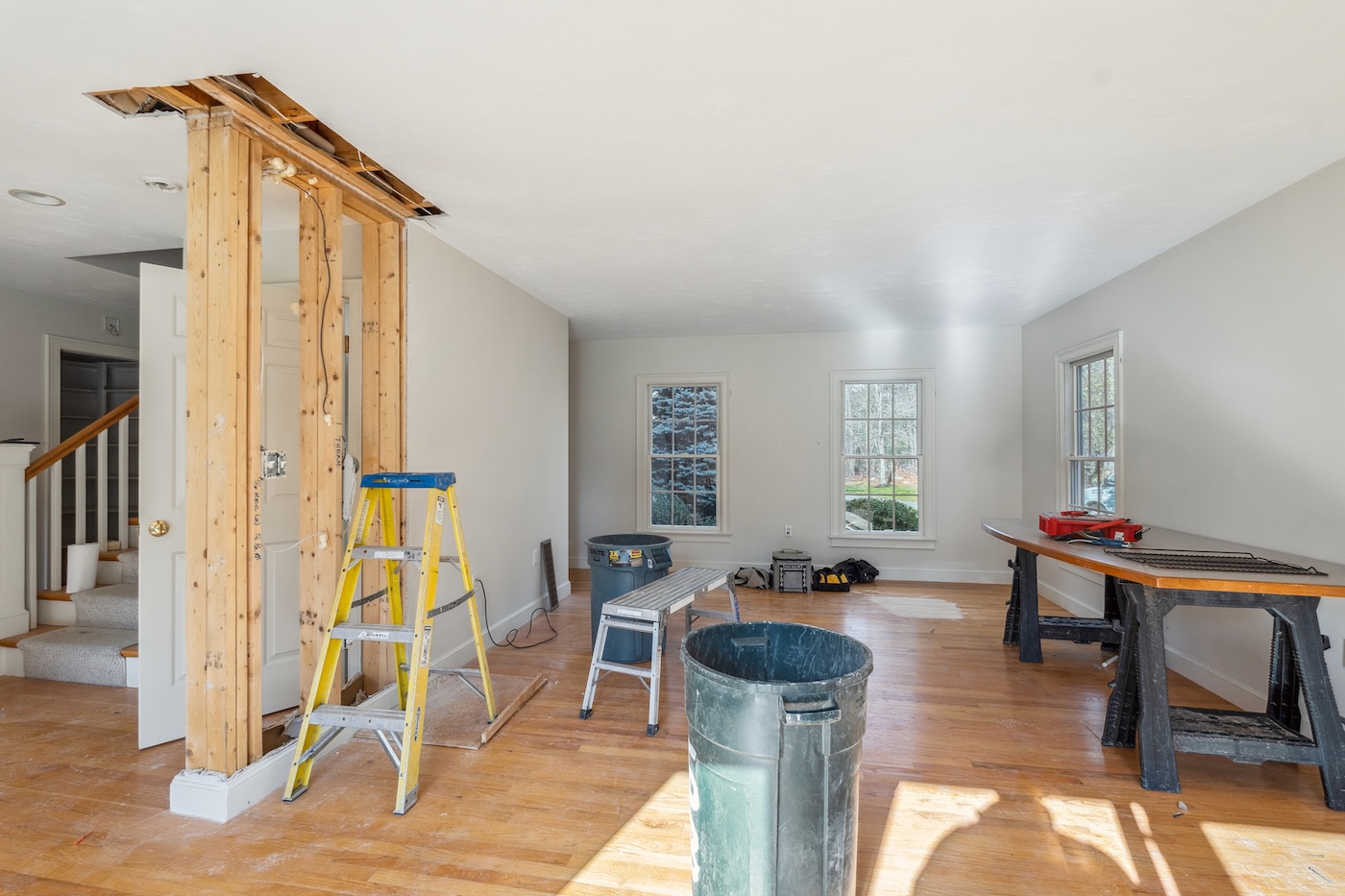
When our pipe burst in the middle of winter and flooded the main living area of our renovation project, our contingency was there to save us. Within a day, we were able to cut a check to cover the additional labor and material costs needed to keep the project on track.
If you want to go deeper on contingency planning, I wrote a full breakdown of what it is, how to size it, and why it’s a total lifesaver for any home renovation project. Read the post here 👉 The Construction Contingency Playbook: How to Avoid Budget Nightmares.
Other Not-So-Obvious Costs
In addition to your contingency, remember to budget for “invisible” costs that don’t make the Instagram highlight reel, like:
- Permit and inspection fees
- Architectural or design fees
- Disposal and site cleanup fees
These add up way faster than you think!


Step-by-Step Home Renovation Cost Estimator
Setting money expectations early helps you avoid emotional or impulsive decisions once work begins. Here’s the exact budgeting framework we use at the beginning of our projects.
Step 1: Define Your Project Scope
Decide early on whether you’re renovating the whole house or specific rooms. Then determine if the target areas need a refresh (cosmetic upgrades) or a complete renovation (structural and systems work).
Create a list of every item you want to accomplish and sort them into two buckets: “must-haves” and “nice-to-haves”. The clearer your priorities, the easier it is to keep the budget in check when the decisions start piling up.
Step 2: Establish a Baseline with National Averages
Next, gather current market data. As I mentioned above, labor and material costs vary by geographic location, but understanding national cost averages can give you a sense of what to expect for your project.
Home Renovation Cost Resources
HomeGuide publishes project-specific and geographic-specific cost guides based on the most recent year’s data (in this case, 2025 averages). Use them to build your baseline estimates before talking to contractors.

The Journal of Light Construction is another great resource for cost and value comparisons by job type and region. JLC focuses on the ROI of your renovation projects and serves as a helpful guide for allocating your funds, especially if you’re optimizing for home value.
The JLC cost vs. value reports also account for the level of finishes (mid-range vs. upscale), which helps provide a more accurate cost estimate based on your design selections.
Step 3: Customize Based on Your Home and Lifestyle
Adjust your baseline figures based on your location and material preferences:
- For regional labor costs, search for local contractor estimates using Angi.com, HomeAdvisor, or Thumbtack.
- For materials costs, shop around online and in stores to get an idea of the average cost of your design selections.
This is where your home renovation cost estimator becomes hyper-tailored to your project. Use the national averages as a baseline and adjust based on your location and desired level of finishes.
Step 4: Build a Home Renovation Cost Tracker
Once you’ve gathered your numbers, it’s time to organize them. Create a spreadsheet or use an online home renovation cost tracker tool.
What Your Home Renovation Cost Tracker Should Include
I cover this in greater detail in my Beginner’s Guide to Building Your First Home Renovation Budget, but generally speaking, here’s what your template should include:
- Project Category: Demo, framing, plumbing, electrical, finishes, etc.
- Expense Name: Get super detailed here. Replace “tile” with “primary bathroom floor tile” so you don’t get lost in the line items.
- Estimated Cost: Your original budget assumption
- Actual Quote or Price: What you actually spent
- Variance: The difference between estimated and actual spend
- Vendor or Contractor Name: For reference and accountability
- Quantity: Mainly for materials
- Notes: All the little details you can’t forget!
Seeing everything in one place keeps your project organized, prevents budget drift, and helps identify early warning signs of overspending before things get out of hand.
The Top Line Numbers
Your home renovation cost tracker should show three key numbers at a glance: your total budget, your actual spend to date, and the variance between the two. That variance column is your early warning signal. A positive variance means you’re under budget…a negative variance means the opposite.
Variance Formula: Total Budget – Actual Budget = Total Variance.
Free Home Renovation Cost Estimator Spreadsheet Options
If you’d rather start with a pre-built template than build one from scratch, here are a few options I’d recommend under $20:
- Home Renovation Planner and Template, PDF Version (Under $11 on Etsy)
- Enhanced Home Renovation Budget Planner, Google Sheets (on sale for $13 on Etsy)
- Home Renovation Planner for House Flips, Excel (Under $10 on Etsy)
- HomeZada: Home Improvement Management App ($15.95/month)

Step 5: Shop Around & Compare Contractor Quotes
Collect at least 5 general contractor quotes before agreeing to anything. This isn’t a hard-and-fast rule, but rather a recommended discipline: shop around, compare your options, and understand the landscape before putting pen to paper.
Contractor Quotes
When sourcing quotes, make sure you provide the same project scope to each contractor so you can compare them fairly.
Be cautious of red flags, like vague project proposals, weirdly low bids, or a lack of client references, as these can be signs of trouble.
If you want help navigating the hiring process, I put together a list of warning signs to look out for and what to do instead. Read the post here 👉 Hiring a Home Renovation Contractor? Watch Out for These 7 Red Flags.
Step 6: Refine and Track as You Go
Your budget is a living document. Be sure to update your numbers as new quotes arrive or unexpected changes come up. I recommend weekly or bi-weekly check-ins to compare projected and actual spending.
Use Your Budget to Make Design Decisions
Now that you’ve mapped out your home renovation cost estimates, it’s time to turn your numbers into design selections.
Plug Design Options Into Your Budget
Use your home renovation cost estimator to empower your design decisions, not limit them. Create two or three versions of your budget for different finish levels: low-end, mid-range, and high-end. Plug in the cost of each design finish and notice how it impacts your total project cost.
Compare quartz and marble countertops, porcelain and zellige tile, and brass and chrome hardware. These changes may seem small in isolation, but they can have a significant impact on your total home renovation cost at scale.
Make Adjustments as You Go
Budgets evolve constantly. That’s okay! Update your home renovation cost estimator weekly or after major milestones. This practice reveals money patterns early, like overspending on finishes or underestimating labor costs.
Personally, I like to review my budget spreadsheet at the end of each week to get a sense of where I’m at and make any necessary adjustments before the next week of spending. This allows me to stay on top of my finances without micromanaging every detail.
Stay on Top of Your Home Renovation Cost
Every renovation has its learning curve. That’s part of the process. Once you start seeing money as a creative resource, rather than a limitation, your home renovation cost becomes a lot easier to manage.
So block off an hour on your calendar and start listing out your priorities, creating your spreadsheet, and turning ideas into numbers.
This post is all about estimating your total home renovation cost.
Get Even more Home Renovation guides: