Shower Tile Materials Cheat Sheet: Costs, Tips & What Works Where
Breaking down the best and the worst shower tile materials so you can shop for your next bathroom renovation with confidence.
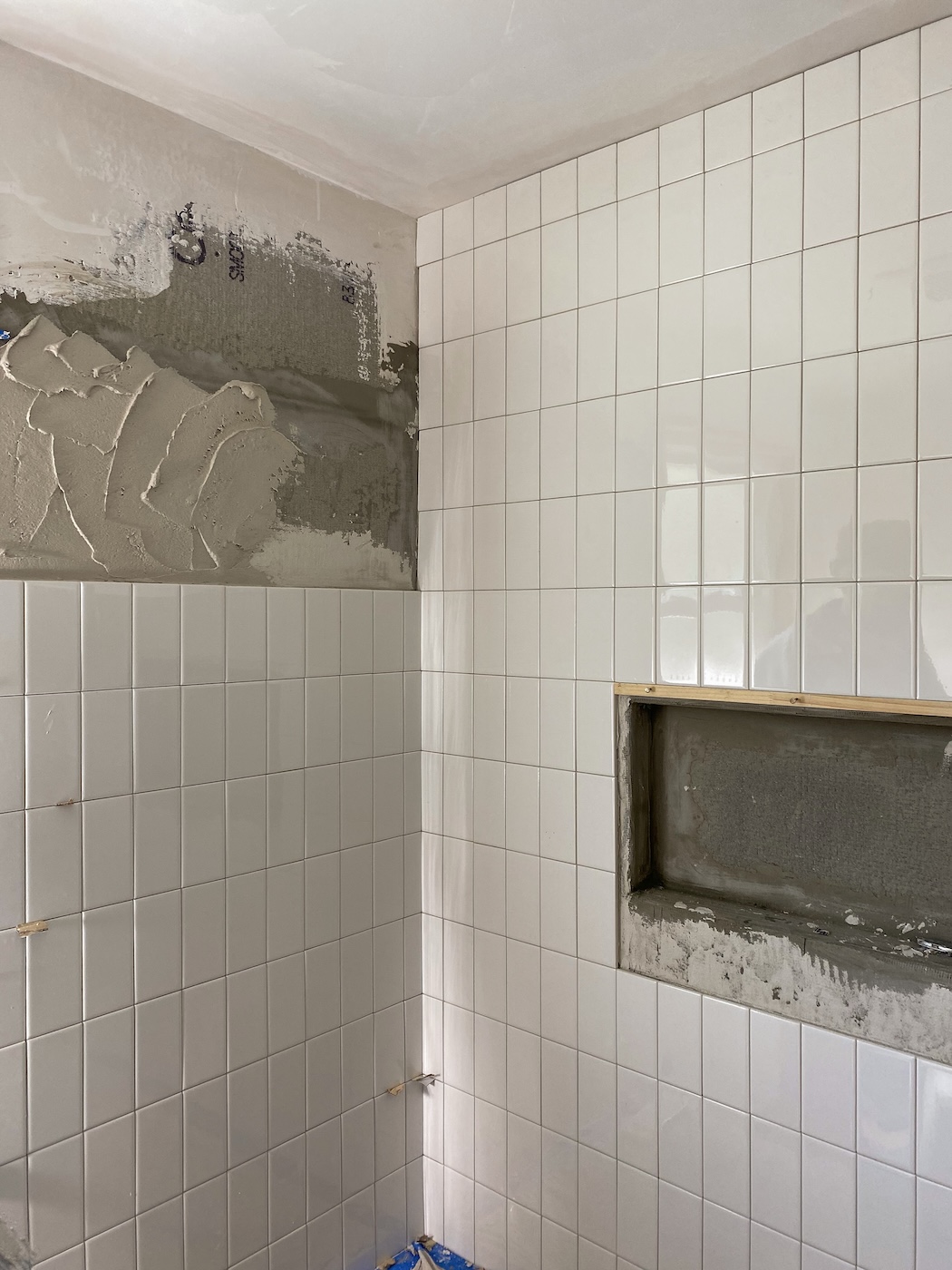
If you can’t take the heat, get out of the kitchen. The same applies to shower tile materials. Not every option you see at Floor & Decor, Home Depot, and Lowe’s has what it takes to last in a high-moisture environment.
You need a shower tile material that can withstand constant use (because showers are important) and direct water exposure, and protect you from those dreaded shower slips.
If you’re planning your next bathroom renovation, or maybe just a shower makeover, I’m going to go over the ins and outs of shower tile materials, so you know what to put where. And what’s actually worth your money.
How to Know If Your Tile Is *Bathroom-Friendly*
Not all tile is created equal. Some are rated for dry areas only. Others can handle constant moisture and steam exposure. And the rest fall somewhere in between. Here’s how to know if your tile selection is built for bathrooms.
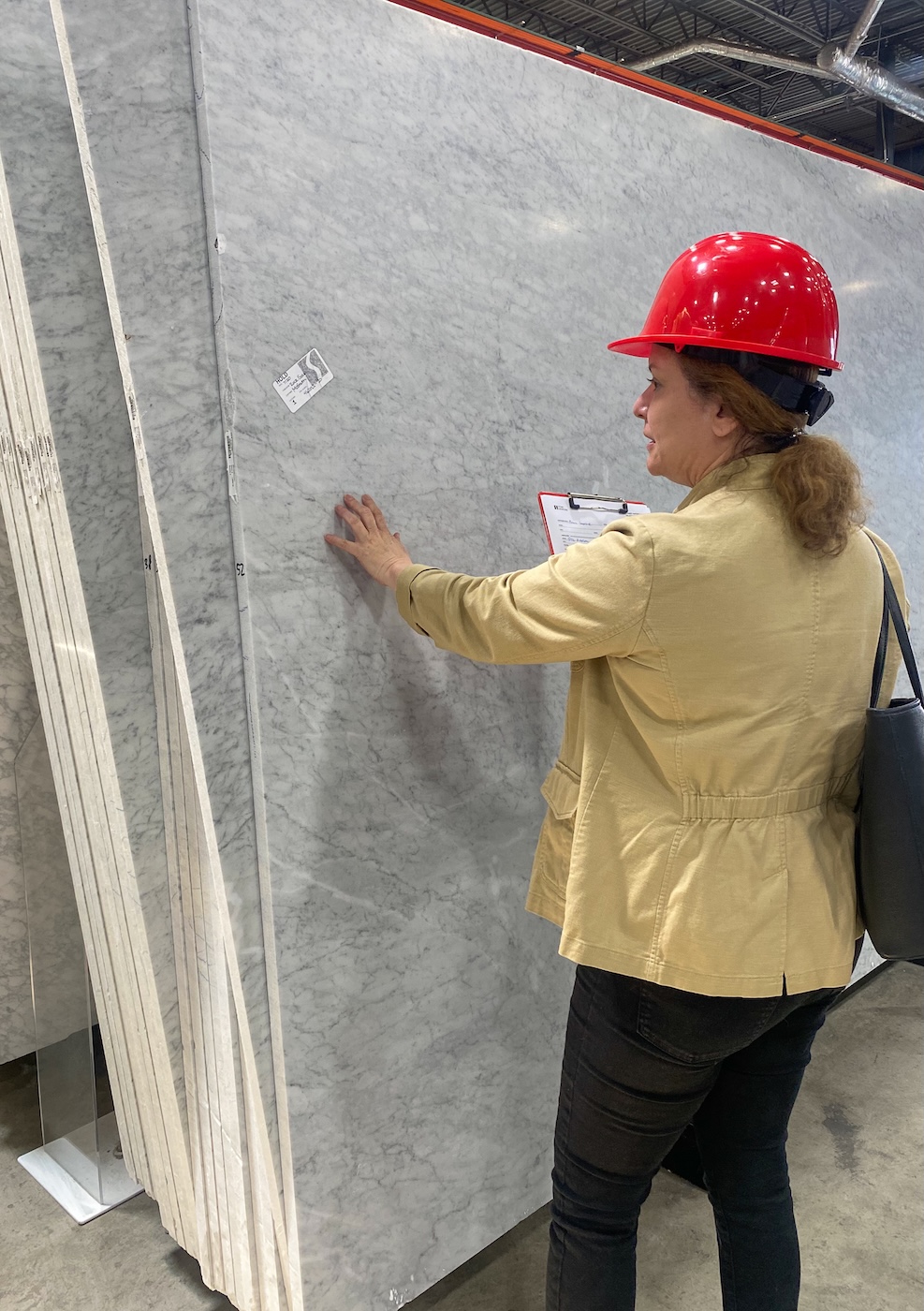
Water Absorption Rate
Water absorption measures how much moisture a tile soaks up. And in a shower, you want as little as possible.
Porcelain absorbs less than 0.5%, making it a *no-brainer* choice for wet environments. Ceramic absorbs more (3-10%), which is okay for shower walls but a little riskier for shower floors.
Natural stones have more variability. Slate, for example, is a low porosity stone with a water absorption of 0.4%, even lower than that of porcelain. Travertine, on the other hand, is a high-porosity stone with water absorption ranging from 2.5% to over 10%. It doesn’t mean you can’t use it in your bathroom. You just have to seal it regularly to reduce water absorption, prevent stains, and maintain its natural beauty.
Moral of the story: always check the water absorption rate before you move those heavy boxes to your cart.
PEI Rating
For a shower floor, you want a PEI rating of at least 3. Anything lower should be reserved for the shower walls.
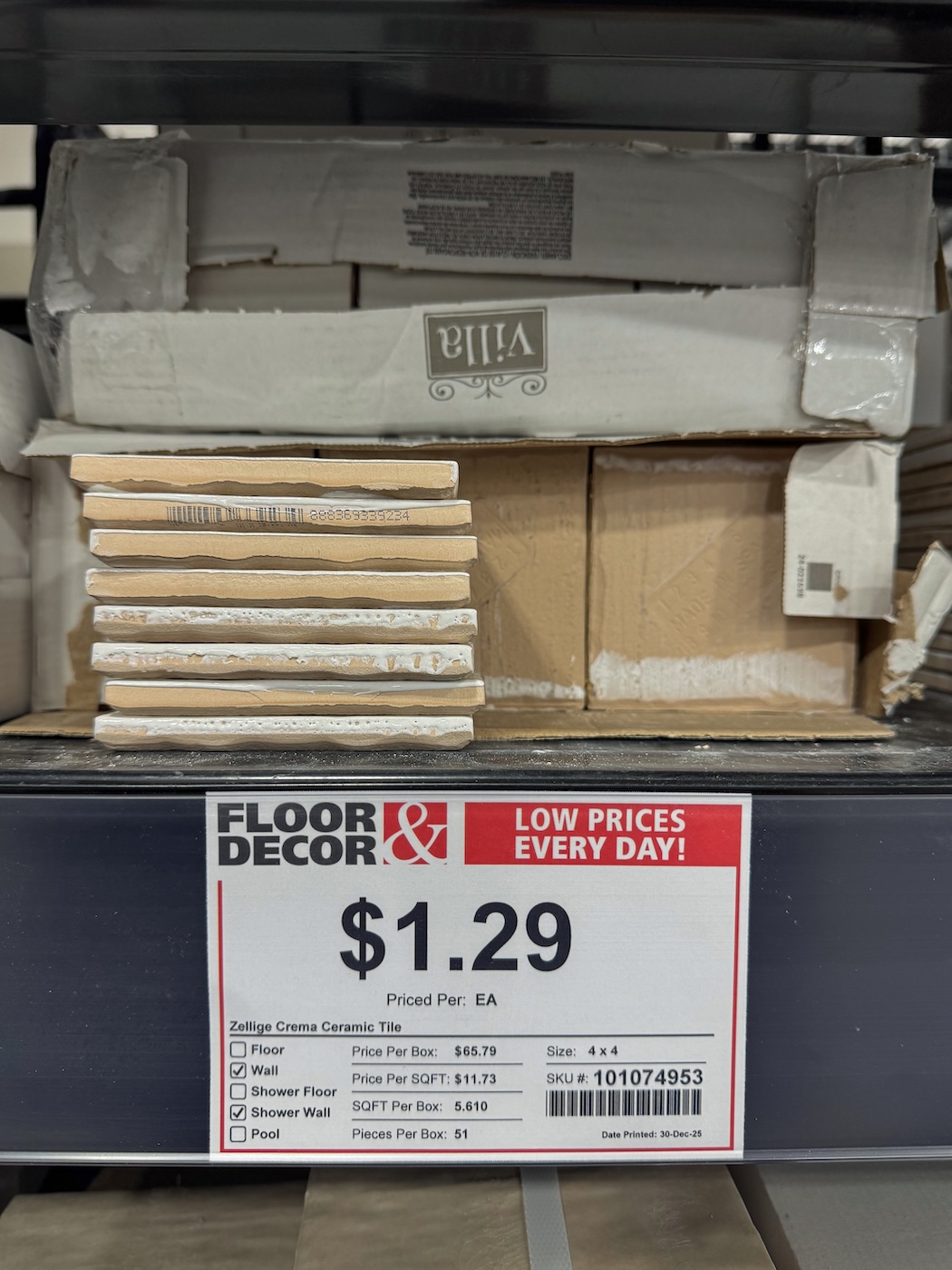
You can usually find the PEI rating on the product spec sheet or by verifying with the manufacturer. Another hint is to check the tile’s recommended use. For example, some manufacturers recommend wall application only, or floors and walls. Always stick to the recommended use.
COF Rating
Think of the COF (coefficient of friction) as the “slip resistance number”. It ranges from 0 (no friction) to 1 (high slip-resistance). Basically, the higher the COF rating, the safer the tile is in high-moisture areas.
For wet areas like your shower floor, you want a COF of at least 0.60. You can go lower with your shower walls, since you don’t rely on them for traction. The COF rating is posted for every tile in the North American market, so double-check the rating before you buy.
If you want to learn more about shower tile options, I wrote a full breakdown of my top recs for low-maintenance showers. Read the post here 👉 The Best Tile for Showers if You Hate Scrubbing Grout.
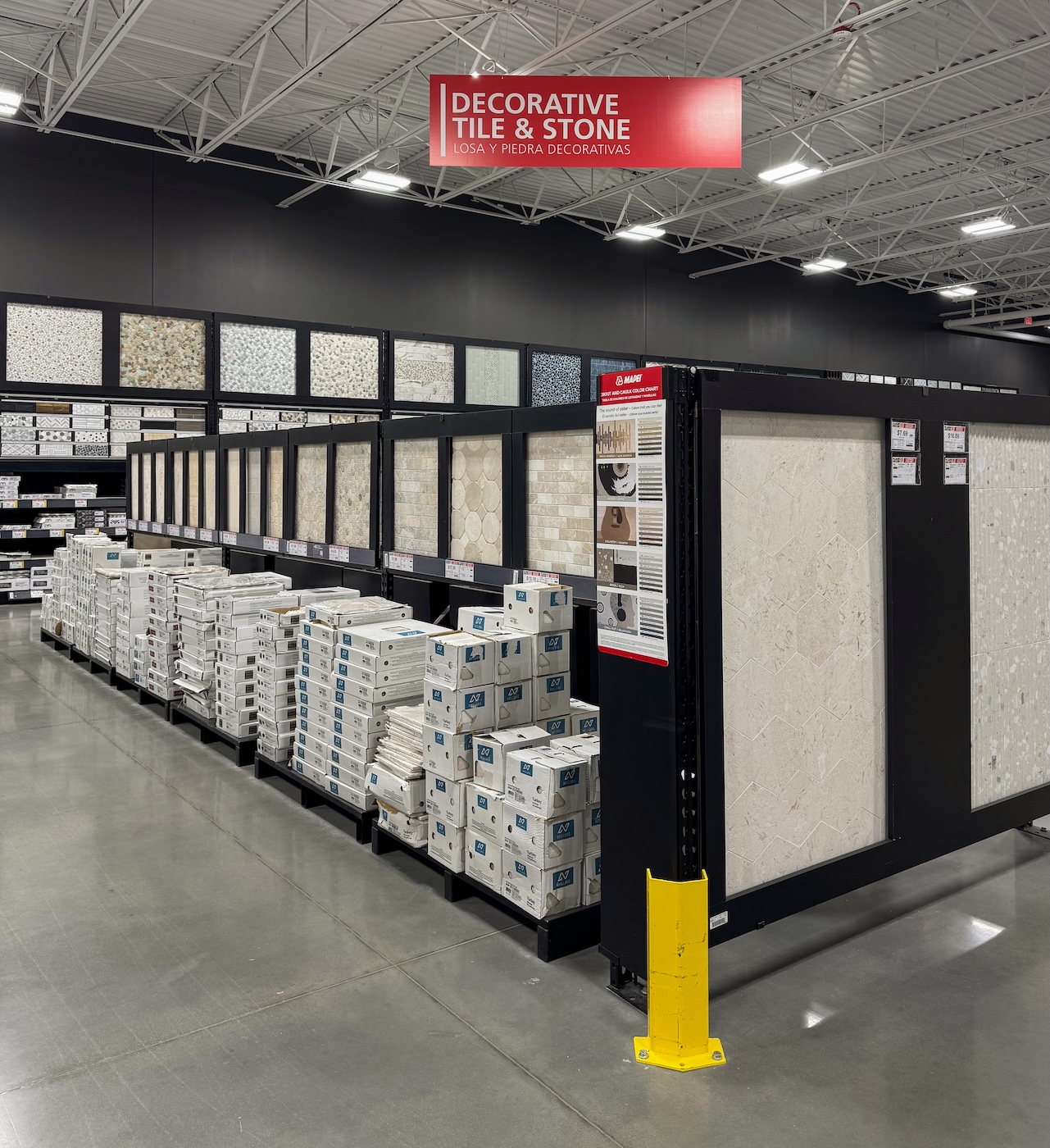
Shower Tile Materials List: Pros & Cons
Ok, now moving on to shower tile materials. Here’s every shower tile material worth considering for your bathroom renovation, what it’s good at, and where it falls short.
Porcelain
Porcelain is the most popular shower tile material. And for good reason. It’s dense, durable, absorbs almost no moisture, low-maintenance, and works on both shower walls and shower floors. Porcelain tile for shower walls looks clean and sleek, holds up really well over time, and comes in a variety of finishes and formats to suit your specific design vision.
The one unfortunate downside is that it’s cold, hard, and slippery underfoot. So if you’re going with porcelain on your bathroom floor, consider adding a radiant heat system and/or bath mats to protect your feet.
Ceramic
Ceramic is porcelain’s more affordable (and more water absorbent) sibling. It’s durable, low-maintenance, lightweight, and generally cheaper. Since it has a higher water absorption rate, ceramic is a great option for areas with indirect water exposure, like shower walls (especially if you’re working with a tighter budget).
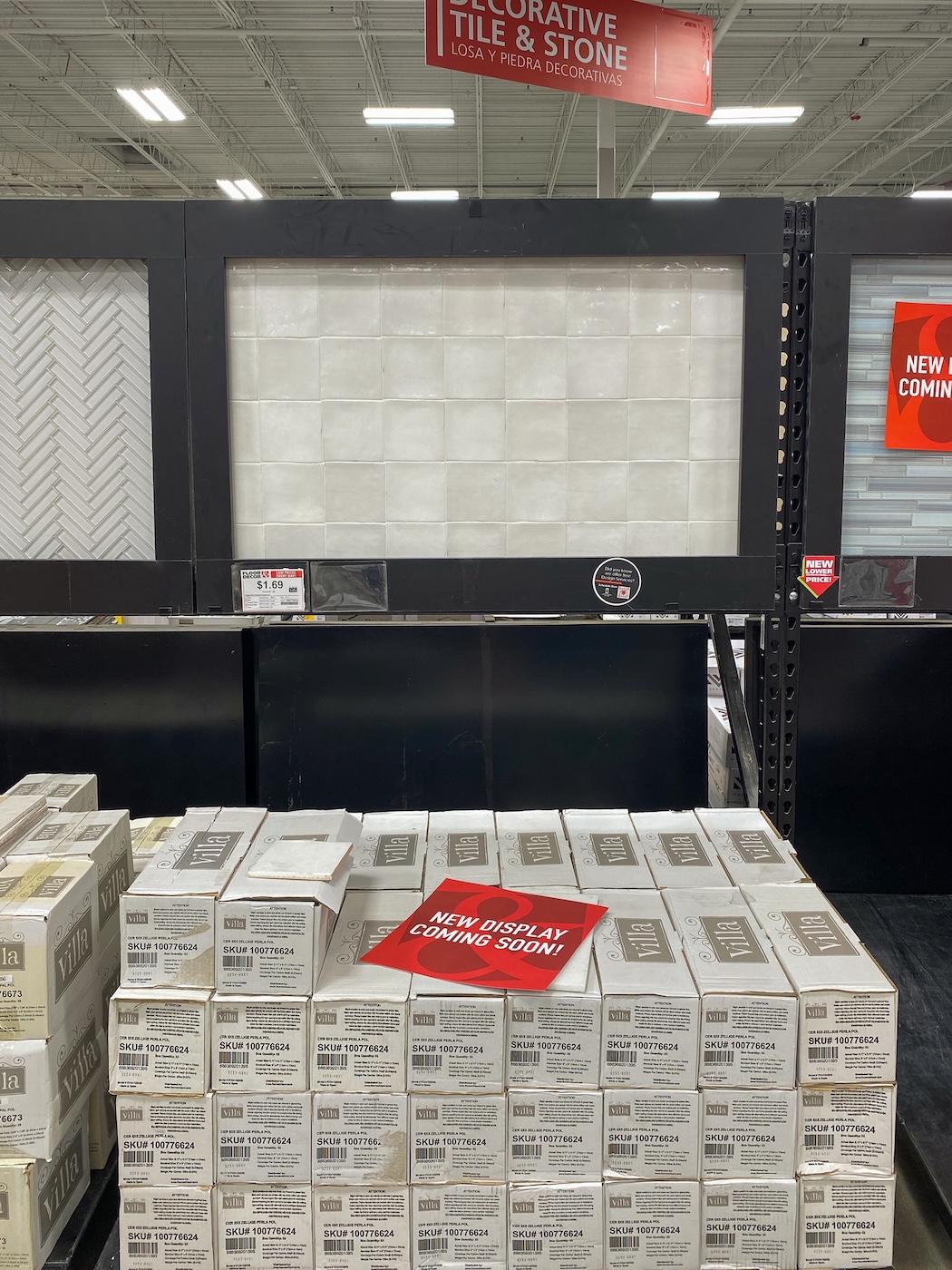
Natural Stone
Natural stone brings an organic character and visual depth that manufactured tile just can’t compete with. It also tends to be a more porous material, which means it requires a penetrating sealer applied before grouting and periodic resealing after installation.
Depending on the type of stone and the sealant used, you’ll have to re-seal anywhere from once a year to once every few years, so factor that in before you commit.
Glass
Glass tile is mold-resistant (zero water absorption), reflective, light-enhancing, and a smart choice for smaller showers where you want to create the illusion of more space.
On the downside, it’s harder to install than ceramic or porcelain, more expensive, and more prone to water spots and scratches than other materials. So I’d recommend limiting it to a feature wall or accent rather than a full shower surround.
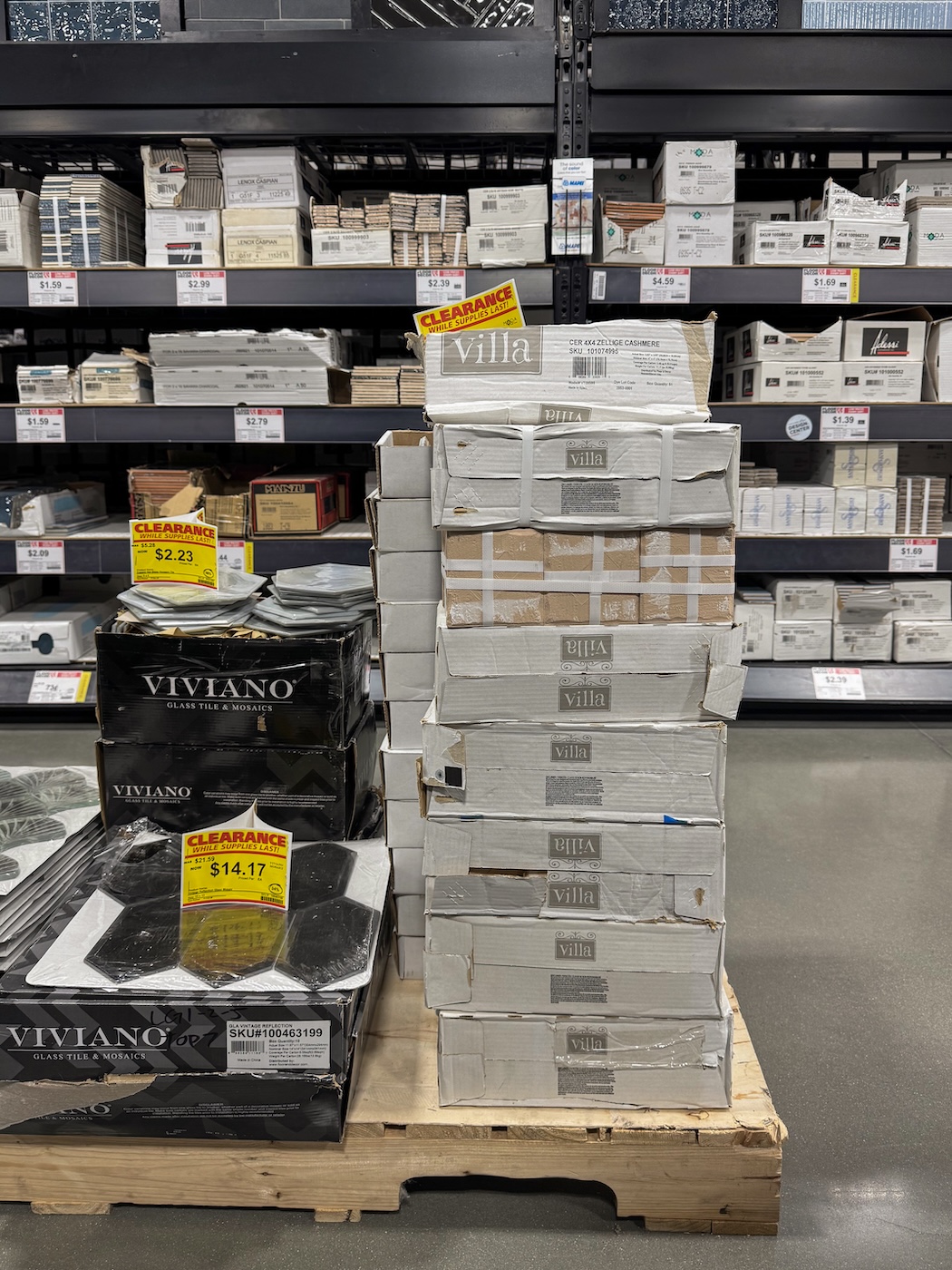
Cement
Cement tile brings bold pattern and personality to a shower. But unfortunately, it’s also more porous than porcelain or ceramic and requires constant sealing (at least every 2 to 3 years). If you love the look and you’re committed to the upkeep, go for it. Just go in knowing what you’re signing up for.
Breaking Down Shower Floor vs. Shower Wall Tiles
The tile you love for your shower wall might be completely wrong for your floor. Here’s how to narrow down your choice for each component of your shower.
Shower Wall Tiles
Think of your shower walls as your creative canvas. The surface isn’t bearing weight or foot traffic, so you have more flexibility with material and finish than you do with your floors.
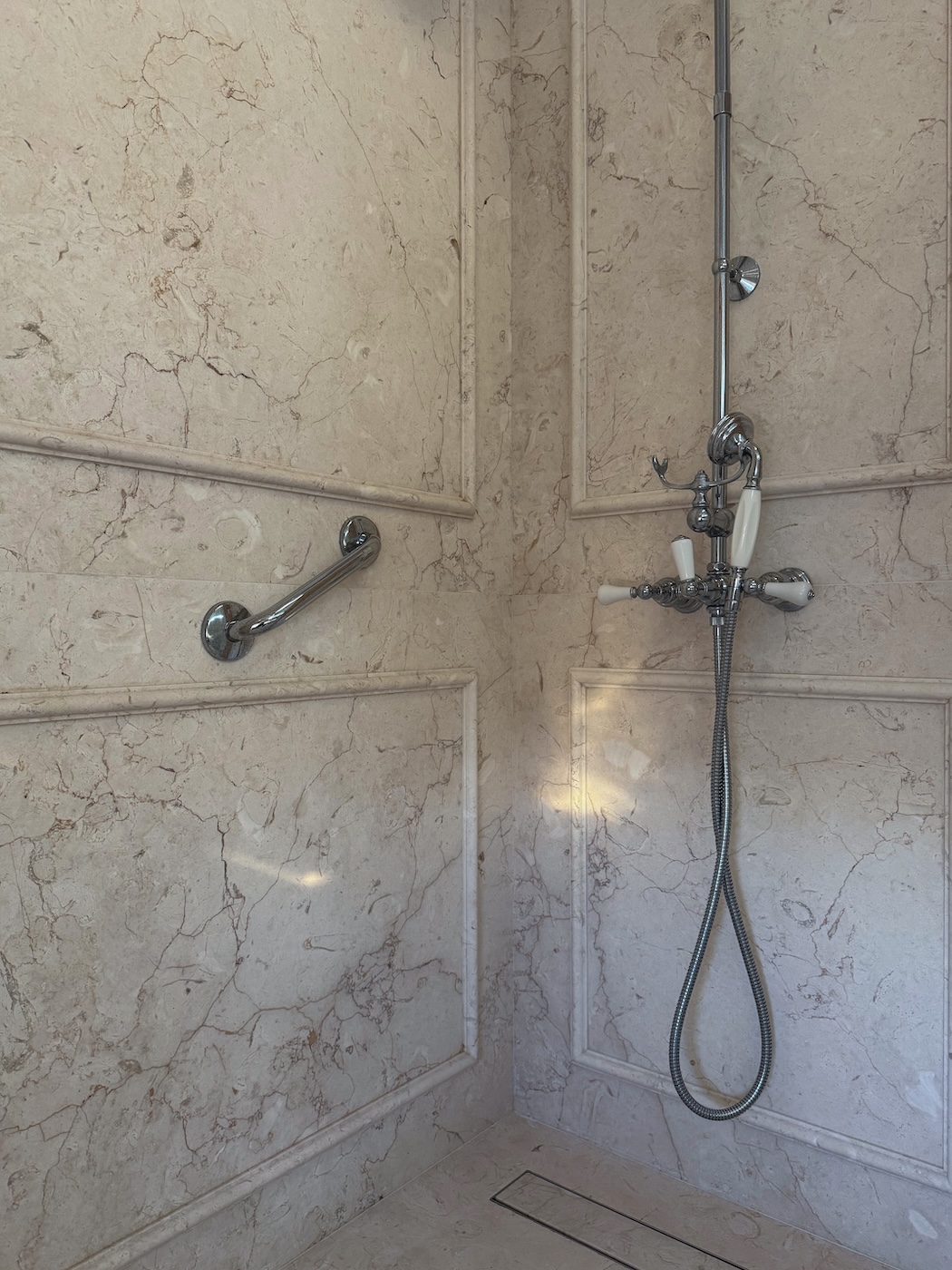
You can opt for larger format tiles to create a seamless, more expansive look (especially if you’re working with a smaller shower). Or you can take a design risk with a dramatic stone slab. These are great options for low-maintenance homeowners because they require less upkeep than smaller tiles with more grout lines.
Shower Floor Tiles
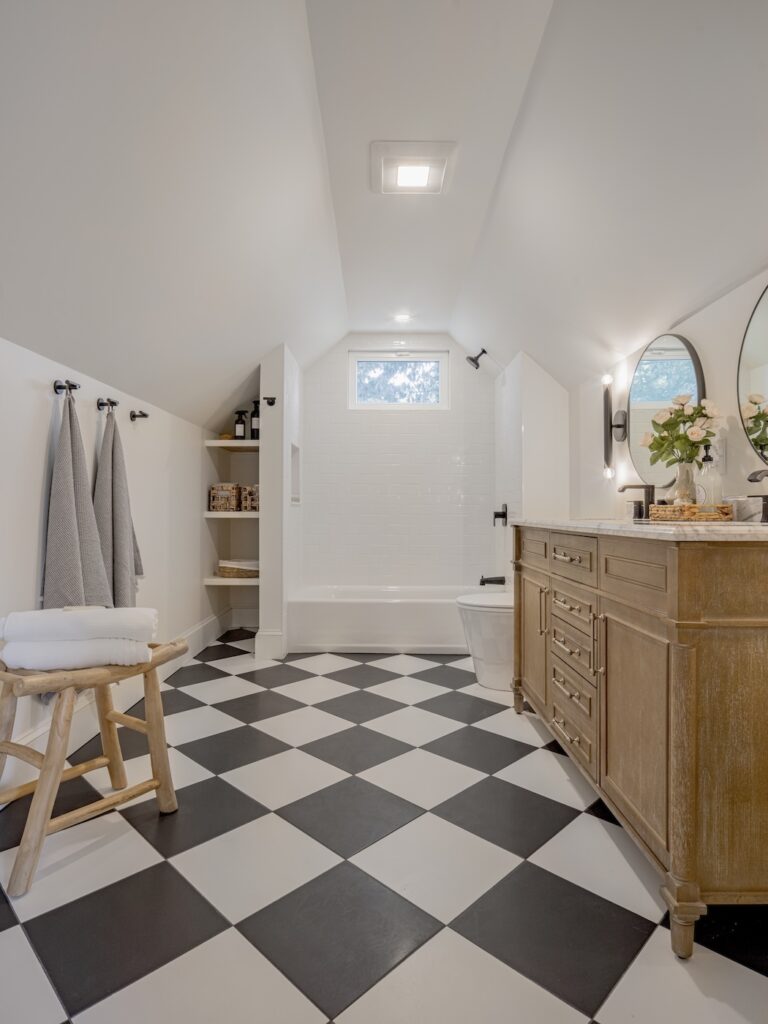
Slip resistance is the name of the game. The key to creating traction is using smaller floor tiles, mosaic tiles, and/or matte and textured finishes that provide better grip. Think honed stone over polished, or a small tile pattern with more grout lines over a larger format tile.
When you’re shopping for shower tile types, remember to choose materials that work in their specific role, both functionally and aesthetically.
Shower Tile Material Cost Breakdown
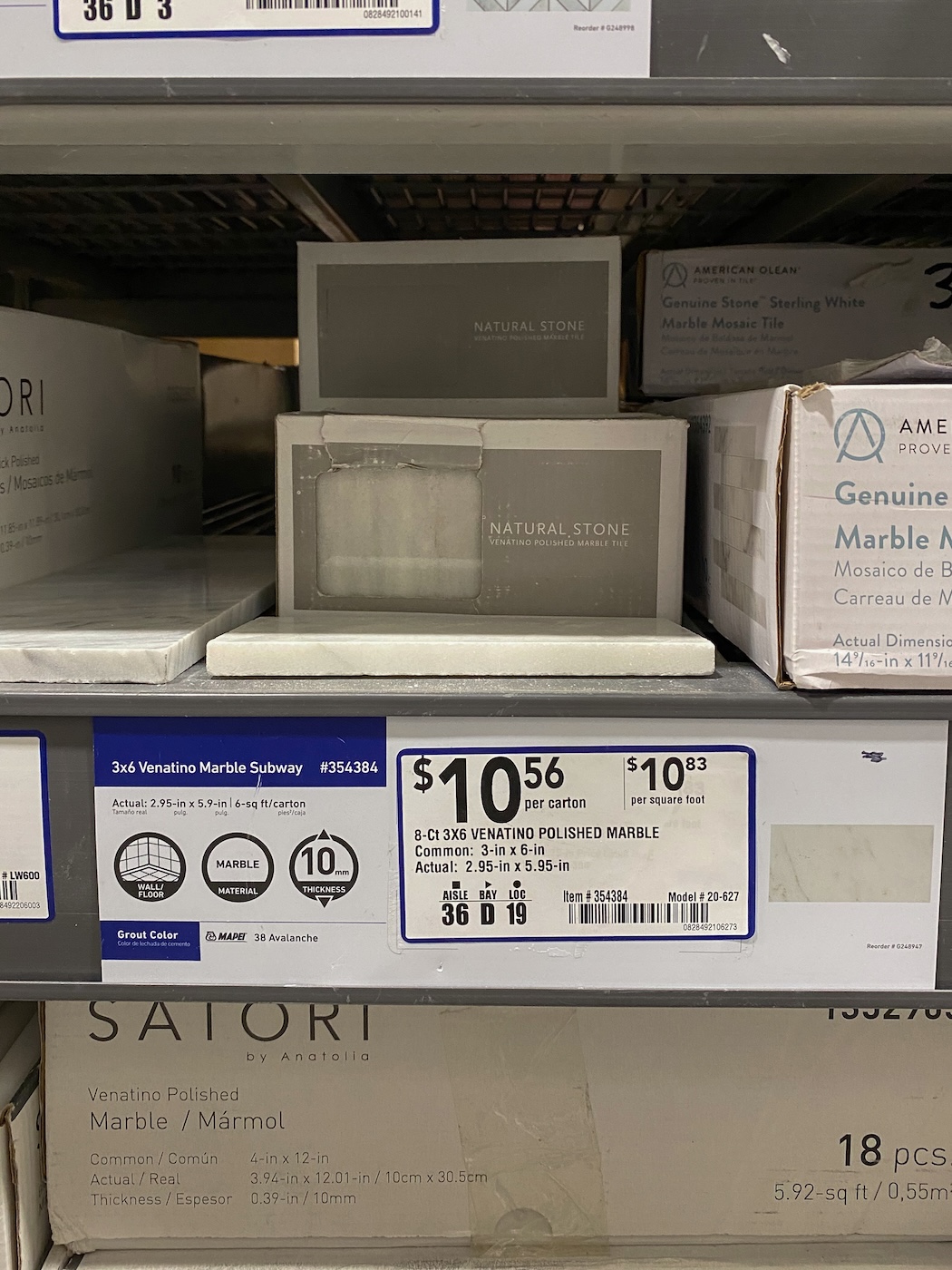
Here’s what you can realistically expect to pay per square foot on materials alone. These are ranges, not quotes. Your actual cost will depend on the specific tile, where you source it, and your specific market.
Shower Tile Material Cost
Tile installation labor ranges from $3 to $15 per square foot or $60 to $120 per hour on average, depending on tile size, layout complexity, and your location. Bathroom tile material cost adds up fast when you factor in labor, so make sure you build that into your bathroom renovation budget before you commit to a material.
If you’re budgeting for a full bathroom renovation and not just the tile, I broke down every cost you can expect to pay this year. Read the post here 👉 Your Bathroom Renovation Cost Estimates Based on 2026 Data.
Best Shower Tile Material: Ceramic or Porcelain?
Porcelain is the overall best choice for the shower. It’s denser, absorbs way less moisture, and holds up over time, especially in high-moisture areas like under the showerhead. If you’re looking for a low-maintenance, durable material, porcelain tile for shower walls and floors is your best bet.
On the other hand, ceramic is easier to cut, which makes installation more straightforward and sometimes cheaper. It comes in a wide range of styles and finishes and is a great choice for areas that receive indirect water exposure, like shower walls.
The best shower tile material depends on placement. Porcelain is the winner for areas with direct water exposure, and ceramic is a great budget alternative for areas with indirect water exposure. Don’t be afraid to use both in your shower!
Non-Slip Shower Floor Tile Materials
Slip-resistance doesn’t mean ugly shower mats. There are plenty of shower tile materials that provide natural traction and help prevent scary slips. Here are my top recs:
Textured Porcelain
Textured porcelain provides better traction than polished porcelain and is the most common choice for non-slip shower floor applications. It’s durable, water-resistant, and low-maintenance. Plus, you can shop from a range of colors and shapes to match your shower design vision.
Mosaic Tile
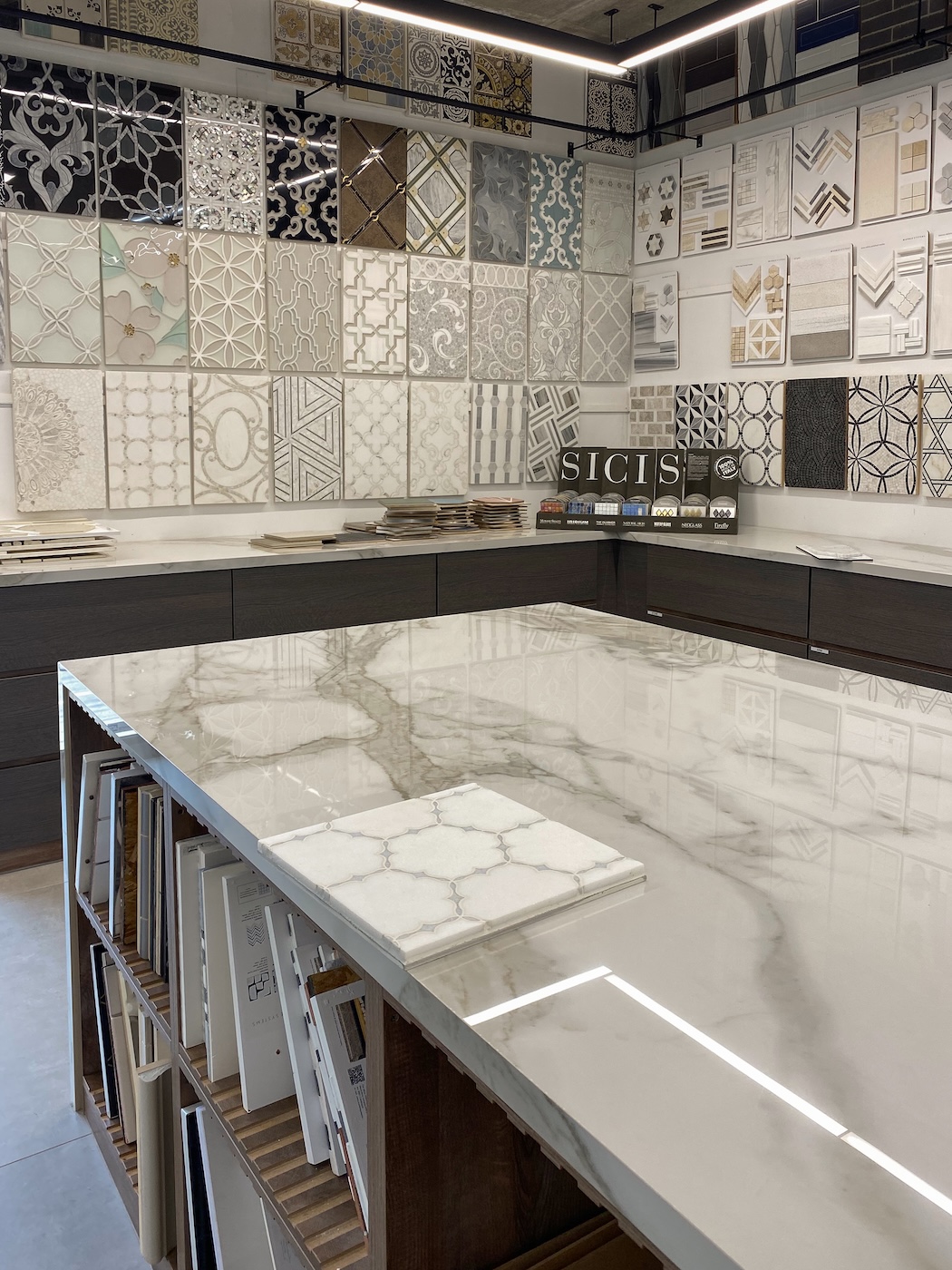
More tiles mean more grout lines, and grout lines create friction. A mosaic floor offers better traction than a large-format floor, almost by default, and comes in a lot of different materials (ceramic, porcelain, and natural stone, to name a few).
I almost always use mosaic tile floors in my showers, and they consistently deliver on style and safety. This is my favorite at the moment.
Matte Finish Tile
As a general safety rule, matte > glossy. Every time. So, if you love the look of a particular tile and it comes in both finishes, save yourself the slippery floors and opt for the matte version instead.
Honed Natural Stone
Honed natural stone is beautiful and functional when properly sealed. It has a matte, slightly textured surface that grips well (unlike polished stone, which becomes super slippery when wet!) Keep up with the sealing, and it will hold up well on your shower floor.
When you’re shopping, make sure to look for a COF of 0.60 or higher for any tile going on a wet floor, so you know it can handle the job.
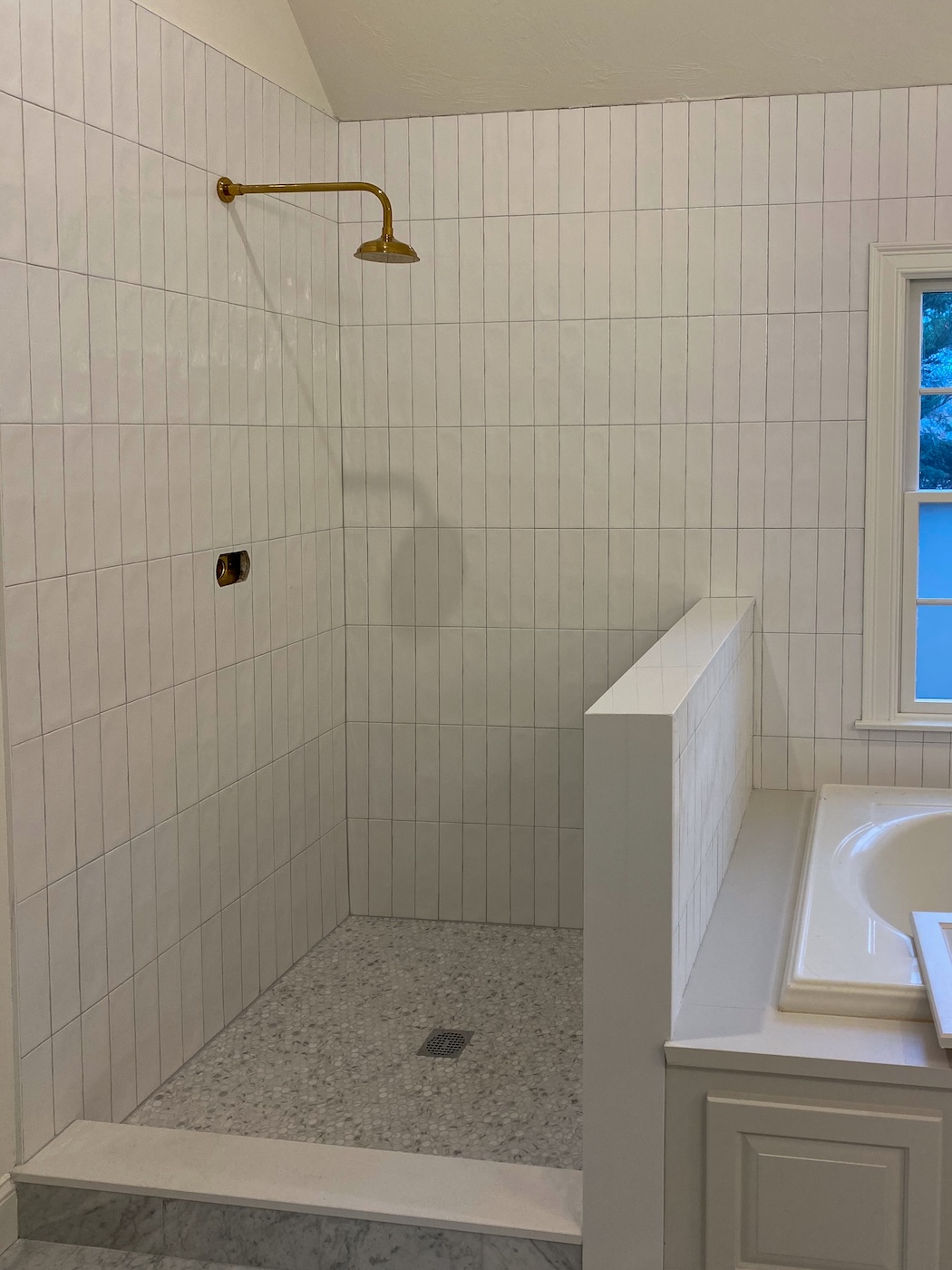
Which Shower Tile Material Is Right for You?
As you’ve probably gathered by now, there’s no one right answer here. The best shower tile material comes down to your bathroom, your budget, your lifestyle, and how much maintenance you want to commit to.
If you want something durable and low-maintenance, porcelain is your girl. If budget is top of mind and you’re tiling low-moisture areas, go for ceramic. And if you want a head-turning design feature and you’re willing to maintain it, natural stone is the obvious choice.
Start by getting honest about your priorities. Then visit a few tile stores to look and feel the different options. Trust your gut, research the tile specs, and pick the shower tile materials that fit your lifestyle and home.
This post is all about the best and worst shower tile materials!
Get Even more Bathroom Renovation guides:
- The Best Tile for Showers if You Hate Scrubbing Grout
- 19+ Stylish Powder Room Lighting Ideas under $200
- What You Can Expect to Pay for a Bathroom Renovation in 2026
- 5 *Surprisingly* Affordable Bathroom Upgrades That Won’t Hurt Your Wallet
- Steal the Bathroom Renovation Checklist I Use For All of My Renovations